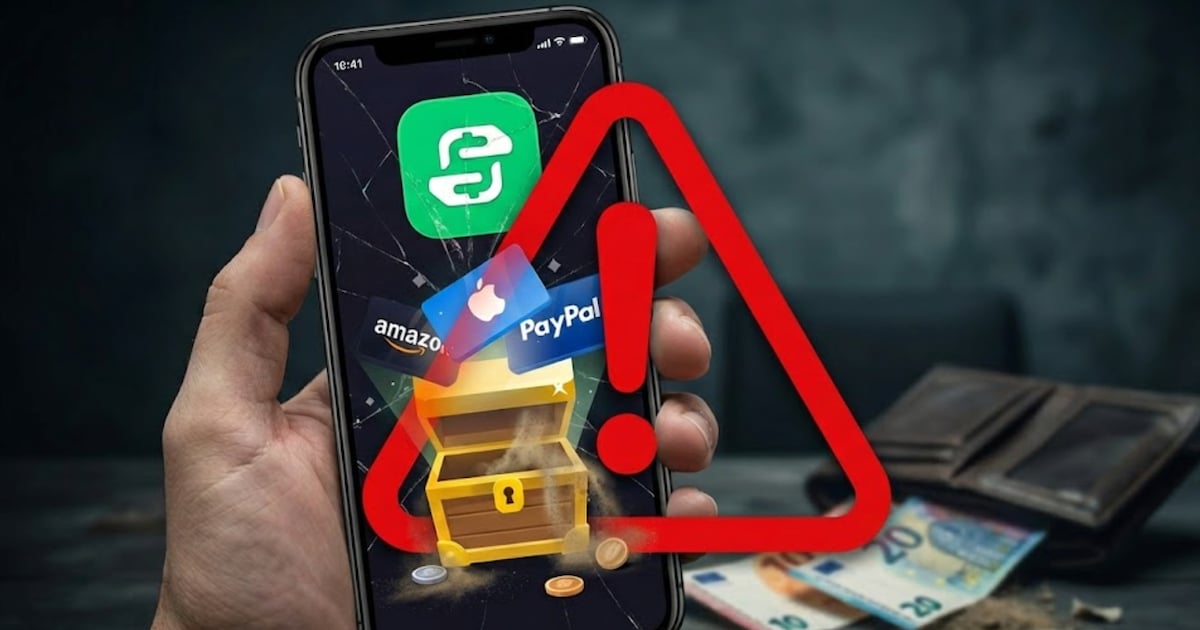
There are currently advertising clips circulating on TikTok and X that promise quick money. Allegedly, users can earn up to 35 euros per hour – just by scrolling the “For You” page. The Freecash app is behind the viral ads. What sounds like a lucrative part-time job, however, turns out to be a questionable business model with significant data protection risks upon closer inspection.
The advertising videos and advertising postings specifically give the impression that they are official job offers from TikTok itself. However, the advertisements actually lead to App Free Cash, which has quickly worked its way to the top of the download charts. TikTok has since responded by removing many of these clips because they violate its guidelines on misleading financial advertising.
After installation, however, it quickly becomes apparent that there is no money for scrolling. Instead, Freecash acts as a broking platform for mobile games such as “Monopoly Go” or “Disney Solitaire”. Users are supposed to complete time-consuming tasks in order to earn small amounts – often just a few cents. Higher payouts are usually only achievable if high game levels are achieved in a short time. Many people can only do this through paid in-app purchases.

Freecash: The actual business model
The security company Malwarebytes has explained what Freecash actually does in an article, “Get paid to scroll TikTok? The data trade behind Freecash ads“ from January 26, 2026. According to this, the app is not intended to pay users for the use of social media but rather serves as a mediation platform between game developers and players who are potentially willing to pay.
The Berlin parent company Almedia describes Freecash itself as a tool to specifically direct users to games in which they are most likely to spend money or consume advertising. According to Malwarebytes, the company uses, among other things, historical spending and usage data to make players as “valuable” as possible for advertising partners. The promised payment for scrolling is therefore part of a classic lure offer.
The real prize: extensive data collection
In addition to the misleading advertising promise, Malwarebytes sees a significant data protection problem. Freecash’s privacy policy provides for the automatic processing of highly sensitive personal data, including information about health, religion, sex life, sexual orientation and even biometric characteristics.
Anyone who installs additional games via Freecash also accepts additional data protection regulations and tracking mechanisms with each app. According to Malwarebytes, this creates a multi-layered usage profile that goes far beyond a single app. Privacy advocates warn that such profiles are particularly valuable to data traffickers, for example, to identify people who may be more vulnerable to further commercial or fraudulent offers.
Affiliate marketing and misleading advertising
When asked about the TikTok ads, Freecash said, according to Malwarebytes, that the particularly misleading advertising clips were created by external affiliate partners. In fact, Freecash operates a commission programme where third parties are paid for app installations. The company announced that it would tighten controls on these partners.
However, the case shows a structural problem in digital marketing: the more aggressive the advertising promise, the higher the click and installation numbers – often at the expense of transparency.
About the Author