Goodbye to ice scraping? A Reddit thread shows which ideas really help—and which belong in the cabinet of curiosities.
In the Reddit thread, everything starts with two “life hacks”: Either sprinkle a thin layer of baking soda on the windshield or put a reusable plastic wrap over it so that the ice comes off more easily in the morning. The response is rather muted.
While some users acknowledged the baking powder idea with emojis, the thread quickly tipped towards humor. Suggestions like “put the car in the microwave for five minutes” or “just take the windshield into the house for the winter” suddenly appear as supposed “solutions”—not meant seriously, of course, but a good example of how desperate the search for shortcuts can be on winter mornings.
Between the jokes there are also solid tips that many drivers have long known:
- Windshield covers—from custom-fit mats to cardboard emergency solutions
- Ice protection for mirrors, for example with old socks
- De-icer sprays for a quick solution in the morning
- Hydrophobic coatings such as Rain-X (view directly on Amazon), which make it difficult for water and ice to adhere
And of course the classic at the expense of the environment and other people: start the engine, turn up the heater and fan and scratch at the same time from the outside. The fact that letting the engine warm up while stationary is prohibited in Germany according to the road traffic regulations fine As expected, the community tends to ignore it.
What really helps—and what it’s better to stay away from
If you look at recommendations from automobile clubs and experts, the wheat is quickly separated from the chaff. The ADAC advises clear on simple, mechanical methods plus some preparation. This actually helps:
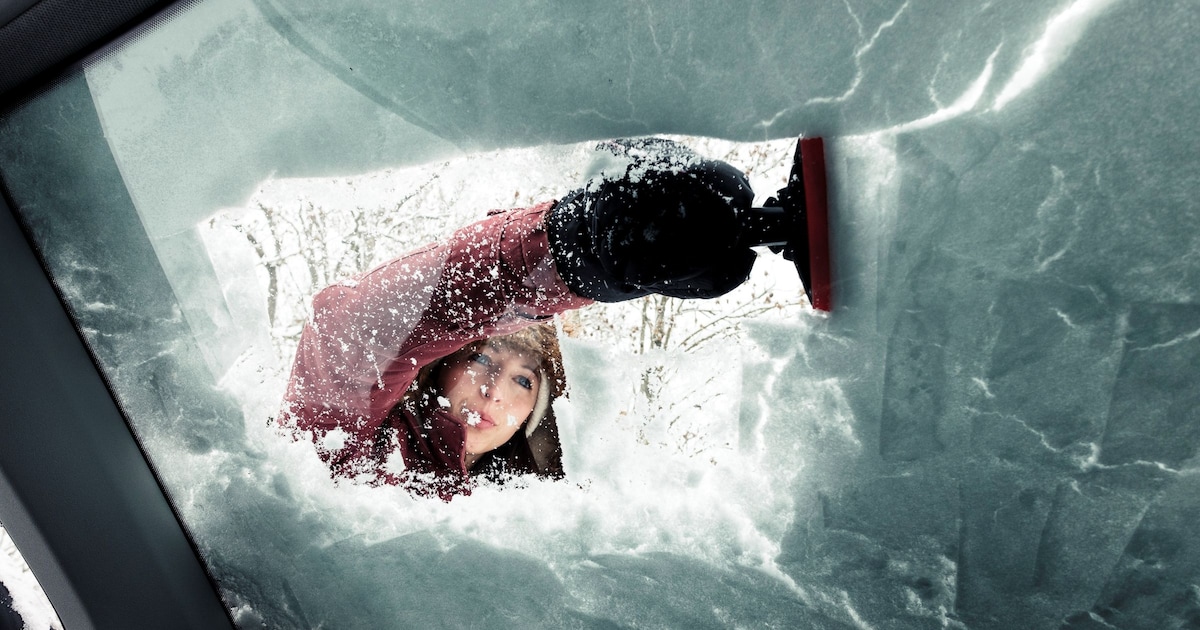
Plastic ice scraper with broom – a sturdy plastic ice scraper with a sawtooth edge for thicker layers and a smooth edge for rework remains the standard solution. An integrated snow broom helps to get the car completely free of snow—including the roof and license plate.
Cover films and simple barriers—special anti-ice films that are placed over the window in the evening and clamped in the doors—effectively prevent the window from freezing over. In an emergency, a sturdy cardboard box also works. Old newspapers, on the other hand, are unsuitable because they freeze and can smear the window.
Windshield de-icer sprays—Ready-made alcohol-based de-icer sprays dissolve ice quickly. It is important to use products that do not leave greasy residues so that visibility does not suffer in sunlight.
Keep windows clean – If you clean the windows briefly with the car wash before parking, you will have fewer problems with dirt particles the next morning, which act like sandpaper when scratched.
Tricks from the “Internet ideas” category are much more critical:
Baking soda, toothpaste, etc.—powders and pastes on the window—neither provide a reliable anti-ice layer nor reduce work. If in doubt, there will be residue that will worsen visibility or be difficult to remove. There is hardly any practical added value.
Hot water on the window—sounds tempting, but it is one of the most dangerous “tricks.” The ADAC expressly warns to avoid defrosting icy windows with hot water. The large difference in temperature can cause stress cracks, and, in extreme cases, the pane will crack. Even lukewarm water poured directly over the glass is not a good idea because it quickly freezes again on the cold pane and can even make the ice layer thicker.
Chemical mixtures—mixtures of spirit, dish soap and water—have been circulating online for years. The following applies here: incorrectly dosed alcohol can attack seals and paint, and dishwashing liquid leaves streaks. Ready-made de-icers are generally better coordinated.
Conclusion: It’s better to scrape in the traditional way than to fail creatively. If you take a few minutes in the morning, you’ll be safest: a plastic ice scraper, a simple cover for the night and, if necessary, a de-icer spray are all you need. Baking powder snow on the windshield or water experiments do not save any time in practice, but in case of doubt they bring new problems. And when the next questionable hack appears in the timeline, one thought will help: the really effective tricks are usually the unspectacular ones.
About the Author