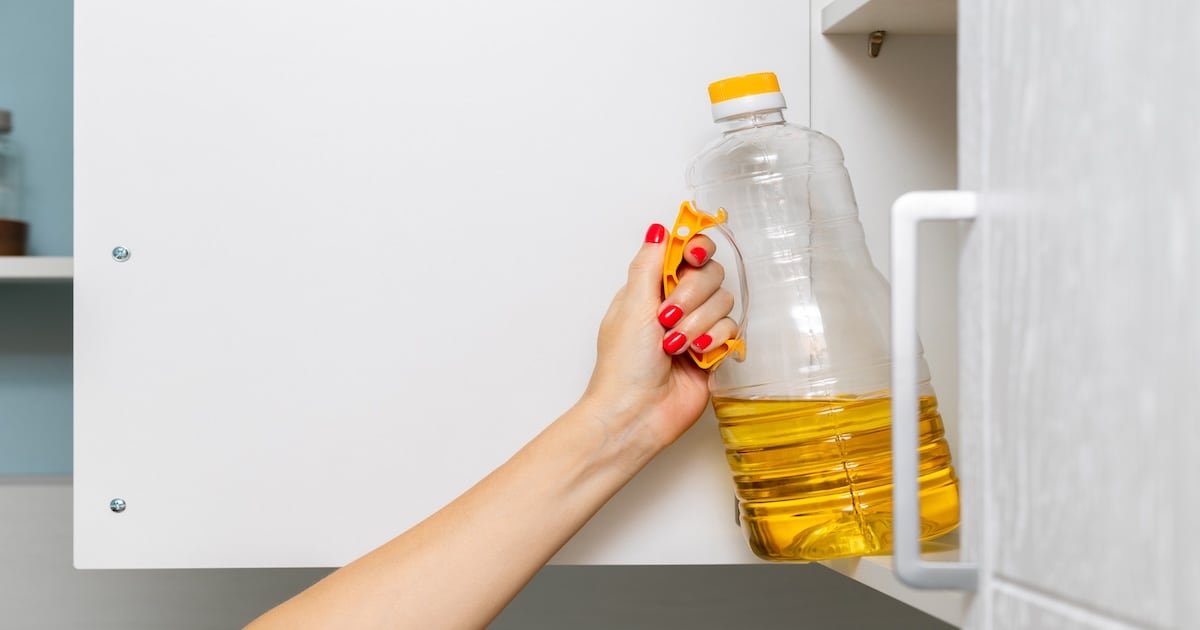
A supposedly new insider tip has been circulating on social media for some time: cleaning and maintaining kitchen cupboards with rapeseed oil. But does the trick really work? Our expert provides the answer.
The promises sound tempting. Care with rapeseed oil is a natural treatment, a cheap alternative to expensive special products and is said to bring a beautiful shine. But does the tip really do what it promises?
Extremely simple, but also effective? Rapeseed oil as a care product
The instructions are simple at first: The kitchen cupboards are cleaned thoroughly, and then the rapeseed oil is spread thinly over the surface on a soft cloth. Finally, polish with a clean cloth. So far, so simple. Now the kitchen cabinets should shine and, ideally, be dirt-repellent.
But let’s take a closer look.
The surfaces of our kitchens are crucial
Most kitchen surfaces are painted, glazed or coated with plastic. Applying rapeseed oil on it is therefore hardly makes sense. What initially shines beautifully can quickly change and cause problems: The oil attracts dust and grease particles and forms a sticky film. In addition, cooking oil can oxidize, become rancid, and smell unpleasant. If it is not distributed evenly, unsightly stains will appear on the kitchen front.
Why rapeseed oil is difficult on wood
The situation looks somewhat different with untreated wooden surfaces. When treating furniture, it is best to use an oil that dries or hardens so that the surface is not permanently greasy. The oils are divided into non-drying oils that always remain greasy (e.g., olive oil), semi-drying oils with a very long curing time that only become moderately hard (e.g. our rapeseed oil), and drying oils. The latter are best suited for furniture.
The better alternative to rapeseed oil is linseed oil, which belongs to the last category of oils—drying oils. It is traditionally used because it forms a protective layer on the surface and does not leave a film there.
But be careful when using it: In linseed oil-soaked rags can self-ignite! This phenomenon happens when the linseed oil generates heat in combination with oxygen. The oil collects in the crumpled rag and can overheat, which can ultimately lead to inflammation. Therefore, some safety precautions should be taken: wash the rag thoroughly, spread it out to dry and ideally store it in a metal container.
Caring for kitchen furniture: The better alternatives
If you want to optimally care for your kitchen furniture and don’t want to constantly have to clean it, you should use special care products for the respective surface type. When it comes to wood oils, it’s worth taking a look at this eco INSTITUT label or that Blue Angels. These products are low-emission, mostly solvent-free, and free of substances harmful to health.
Modern professional products are not only optimally tailored to the material but also ensure that the kitchen remains immaculate for a long time. They are safer, more reliable, and often appear to last longer.
For a daily shine, a mild soapy solution and a microfiber cloth are sufficient.
About the Author