
Google is making call recordings easier. In Germany, this immediately raises questions about consent, criminal law, data protection and disclosure.
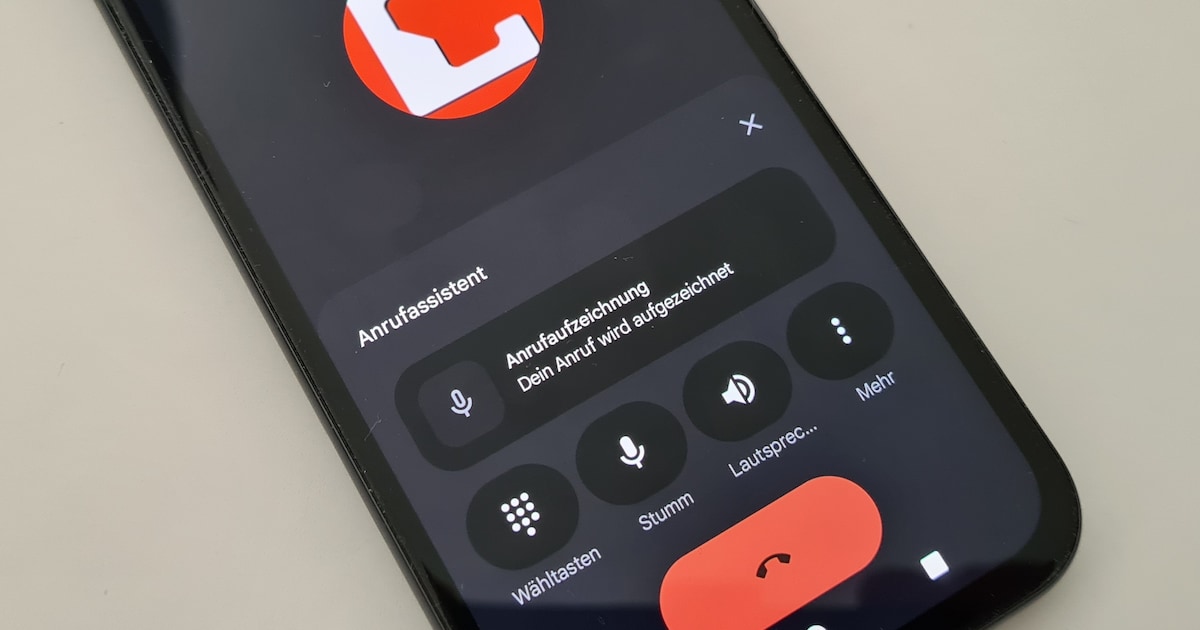
What sounds like a useful convenience function to many users is a highly legally sensitive area in Germany: on Google Pixel smartphones you can use the normal phone app record a conversation. When starting, both sides hear an announcement that the call is being recorded; when stopping, a second announcement follows. Recordings can also be activated automatically for unknown numbers or selected contacts.
This is exactly where the problem lies: what is technically convenient is far from being legally clean. German law does not first ask whether a function was implemented in a technically feasible manner, but rather whether the spoken word could be recorded without effective consent. Precisely because the function is located directly in an everyday app, it could quickly be misunderstood as harmless.
The announcement does not replace consent
The order is crucial: If you want to record a phone call, you should explicitly ask the other person beforehand whether they agree to it – and only then start recording. The automatic system announcement “The call is being recorded” is not a safe shortcut for this. Although it provides information, it does not yet prove prior consent within the meaning of applicable data protection law.
The person you’re talking to can object or hang up, but that’s exactly the crux of the matter: legally viable consent should be given before the actual recording begins, not under the pressure of a process that has already started.
Anyone who simply hopes that silence will be considered consent is walking on thin ice, because mere toleration does not necessarily mean consent. There is also a practical problem of proof: even if verbally on the telephone “Yes” It is often difficult to prove later why exactly this consent was given – especially if the recordings are passed on after the conversation.
Why telephone hotlines are a different case
The often made comparison with audio recordings from service hotlines is also only of limited use. Consent is usually requested in advance, the process is documented organizationally and the processing is embedded in a regulated data protection concept with clear processing rights. In addition, companies rely on specified legal and contractual purposes, such as quality assurance or training, and must demonstrate a viable legal basis for this.
All of this is usually missing in everyday life. Anyone who records a conversation with neighbors, colleagues, tradesmen or their own insurance company usually has neither documented consent nor a reliable justification as to why the recording was started. Furthermore, it is too often unclear what should actually happen with the data when recording – there is no such thing as storing it “in reserve”.
This is precisely why the smartphone function cannot be equated with the hotline standard. It becomes even stricter in the professional environment: As soon as conversations are systematically stored or reused in the company, additional data protection obligations come to the fore and a data protection officer may have to be involved.
Saving and sharing are also tricky
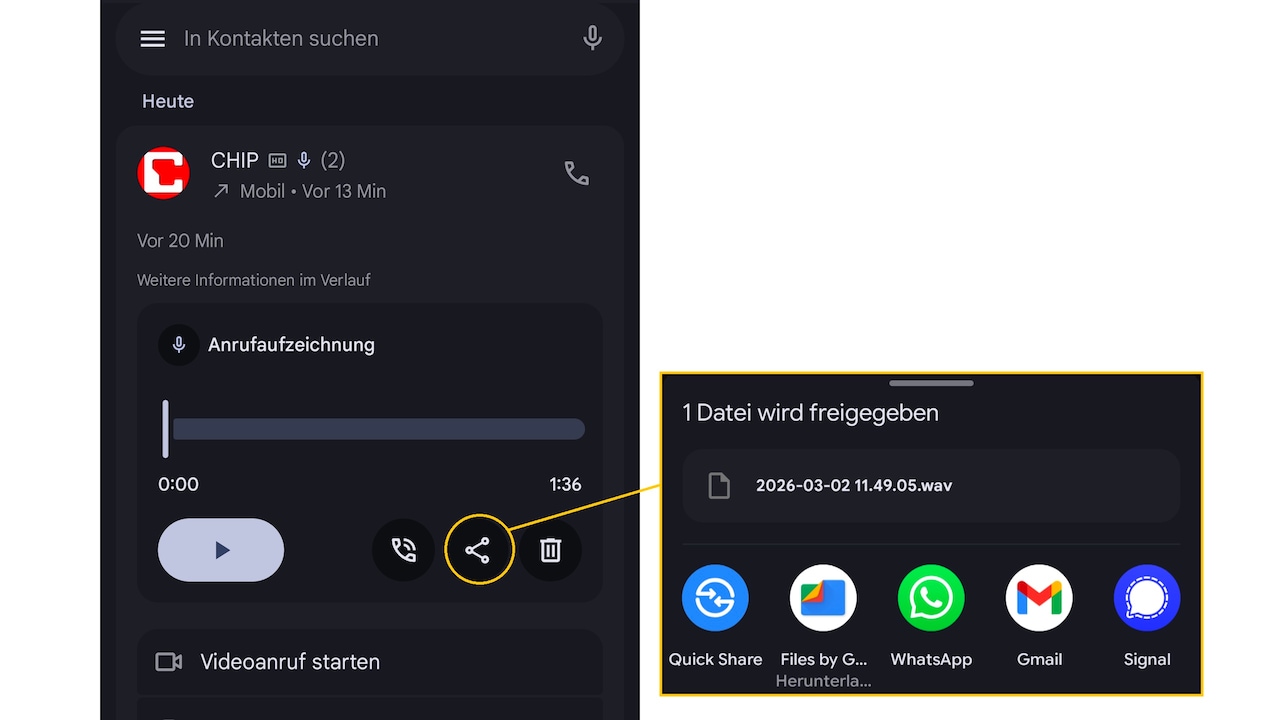
But the risks don’t end with the recording. The file remains on the device and can be exported and shared via messenger or email. This makes the situation worse. Even if a person has agreed to the recording of a specific conversation, this does not automatically mean that they also agree to unlimited storage, to sending it to third parties or even to the publication of a potentially confidential conversation.
Between “I agree to the recording” and “This file may be forwarded, uploaded or made public” There is a big difference legally. Anyone who shares recordings quickly exposes themselves to additional claims – from requests for injunctive relief to claims for damages. If an intimate or reputation-damaging passage becomes public, the personal and economic damage can be significant.
Which is the correct approach in practice
The safe rule for a data protection-compliant procedure, however, is very simple: first ask, then record, then only use for the intended purpose and document the process. If you really need a recording, you should clearly state at the beginning why the recording should be made and a clear one “Yes” wait. The file should then only be saved for as long as it is necessary for this specific purpose. It also makes sense to audibly record the consent and the purpose again immediately at the beginning of the conversation.
A blanket collection of conversations, automatic permanent recording of certain contacts or premature forwarding via WhatsApp etc. are highly problematic and can quickly have legal consequences. For Germany and especially for professional contexts, the following applies: The solution offered by Google may seem technically transparent, but legally it is by no means a free pass. A convenience function can very quickly become a criminal, data protection and personal rights risk, which is already passed on to the user alone in the terms and conditions of the new function.
Prof. Dr. Dennis Kenji Kipker is a lawyer and computer scientist. As director of cyberintelligence.institute, he researches and advises internationally on cybersecurity, digital resilience and IT law in China and the USA. He is part of us Experts Circle. The content represents his personal opinion based on his individual expertise.
CHIP Pick – Get the right smartphone straight away!
More articles on the topic of smartphones
About the Author