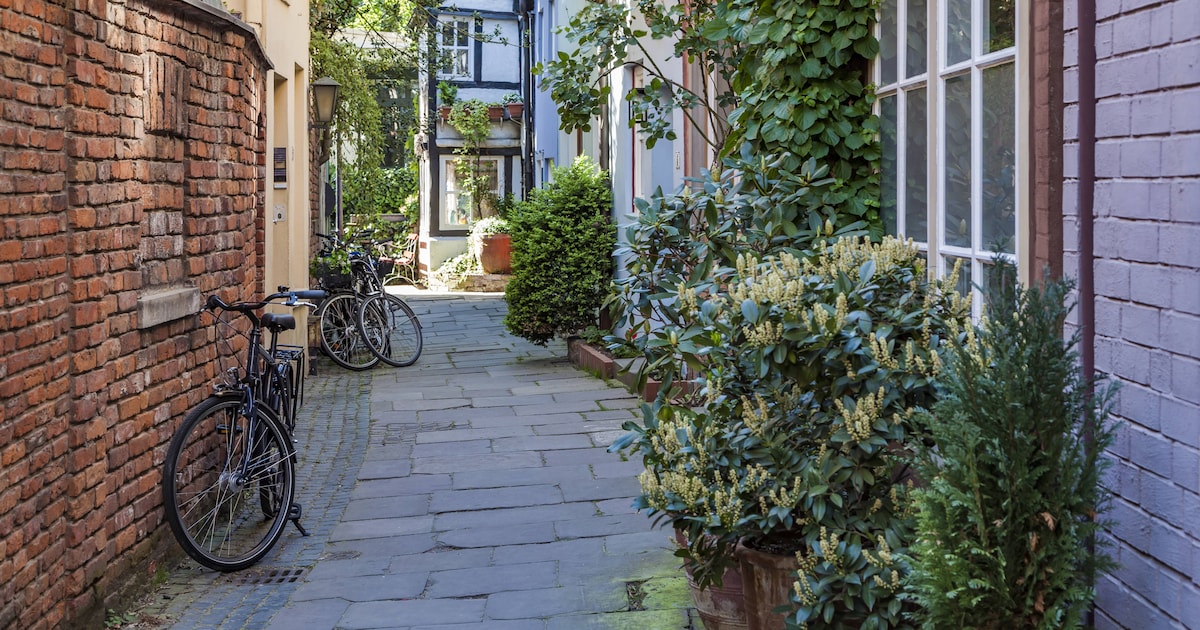
Hundreds of thousands of visitors come to Heligoland every year. But for both them and the locals: cycling is forbidden. There’s a good reason for that.
When you think of Heligoland, you might imagine a typical North Sea island with cycle paths and perhaps a few cars. In fact, a regulation that is unique in Germany applies on the offshore island: road traffic here is almost completely decelerated.
Driving bans contribute to nature and environmental protection
The main island is only around one square kilometer in size, the entire municipal area covers around four square kilometers. There would simply be no space for free-flowing individual traffic, whether by car or bicycle. Narrow paths, short distances and a high proportion of pedestrians would quickly make cycling or even cars dangerous. The legislature has therefore created a special regulation that applies exclusively to Heligoland and radically reduces traffic.
In addition to the spatial conditions, the protection of nature also plays a crucial role. Parts of the island are closed to visitors because seabirds breed there and gray seals rest there. Motorized traffic or a large number of cyclists would put additional pressure on people and animals in a small space. After all, around 350,000 visitors travel to the island every year.

Arrival for holidaymakers is only possible without a car
If you are planning a visit to Heligoland, you cannot take your car with you. Arrival is by ship, for example via the port of Cuxhaven-Döse. There are designated parking areas near the shipping companies where you can park your car during your stay on the island.
But be careful: Some of these parking spaces are in potentially flood-prone areas and are not completely protected against storm surges – it is therefore advisable to take a look at the terms of use of the respective operator.
chip newsletter
CHIP ePower newsletter
Once a week everything about the best e-cars, e-bikes and heat pumps as well as the best sources of electricity: green electricity providers, balcony power plants and solar systems. We will guide you through the energy transition with tests, guides and purchasing advice.
Get around by scooter, Börtebahn, e-taxi or on foot
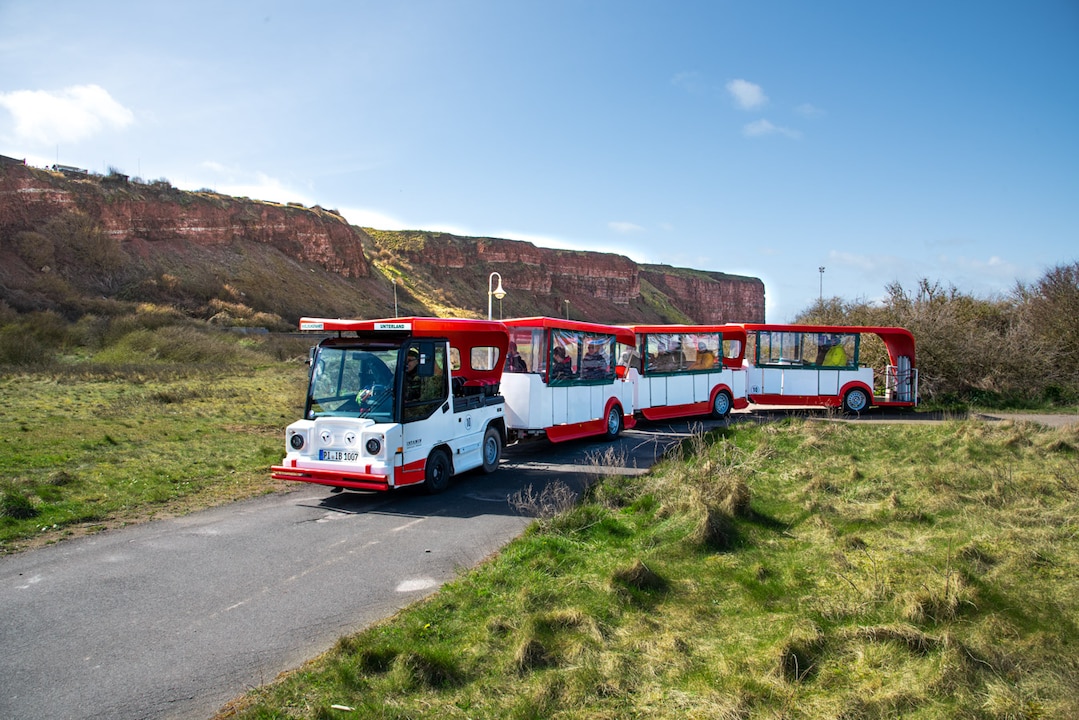
On the island itself you will mostly travel on foot. Thanks to the manageable distances, most destinations can be easily walked. If you still want to move a little faster, you can use other means of transport: Kick scooters are allowed because they are not legally considered bicycles and do not have a motor. Electrically powered small vehicles such as E-scooters or Segways, on the other hand, are covered by the ban and may not be used in everyday traffic.
Public offerings offer you additional mobility. The Börtebahn, a small island railway, runs on fixed routes and is also open to holidaymakers. There are also e-taxis, which make journeys with luggage or for people with limited mobility easier.
Exceptions to the driving ban
However, there is no complete driving ban. Exceptions include the rescue and supply sectors. However, these are strictly limited and are tied to specific tasks. For example, the fire brigade, civil protection, police and medical services are allowed to use special vehicles in order to be able to react quickly in an emergency.
There are also relief options for people with physical limitations. People who are unable to walk well for health reasons can use electric vehicles with appropriate permission. Electric wheelchairs with a limited maximum speed of up to 10 km/h are permitted so that those affected can participate in social life.
Special regulation for children under 14 years
Despite the driving ban, children on Heligoland should have the opportunity to learn to ride a bike. That’s why a special rule applies to them. In the months with less traffic, between October and April, children up to 14 years old are allowed to ride and practice bicycles on the island’s streets and paths. In the high season, this option is restricted again in order to avoid conflicts with the high number of visitors.
About the Author