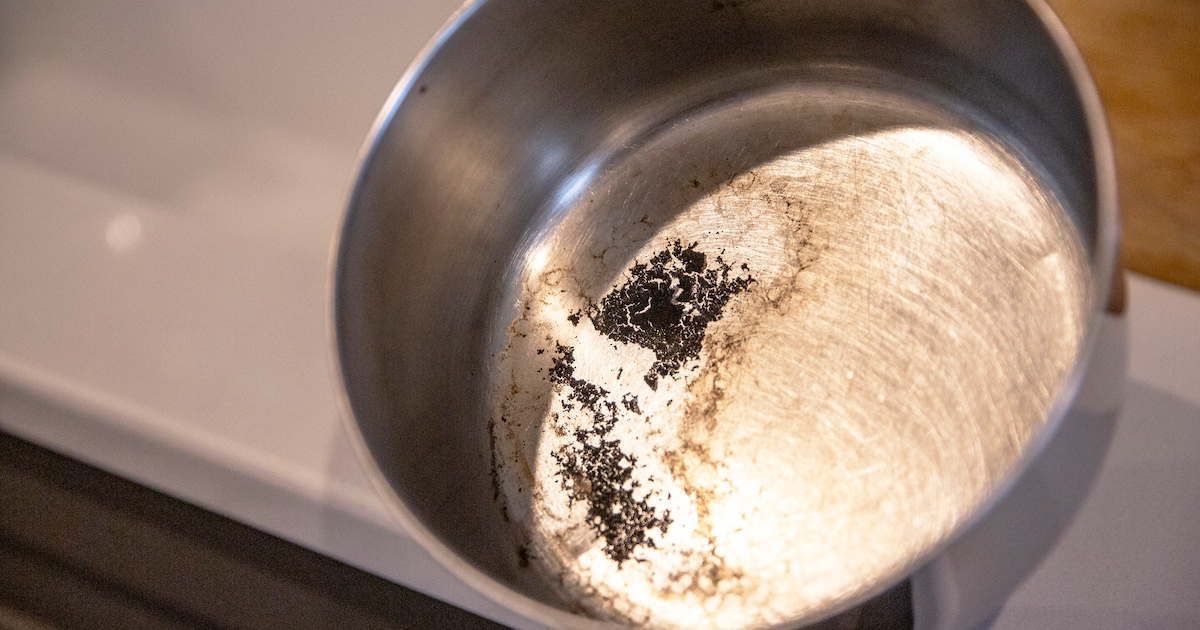
A brief moment of inattention and the bottom of the pot is black. Burnt milk, stuck sauces or leftover rice often seem like a waste for the trash can. But before you give up on your cookware: many incrustations can be removed gently and effectively using simple home remedies.
Before vinegar, baking soda or other products are used, one simple step determines success or failure: soaking. If possible, fill the affected pot with warm water immediately after burning. This will remove the initial residue and prevent burnt-on food residue from hardening further.
What is important is not to cause cold water shockwhen the pot is still hot – this can lead to tension in the material, especially with stainless steel or coated models. Depending on the strength of the incrustation is enough one hour soaking time out of. In stubborn cases, the pot can also be left overnight. Often the majority of the residue can then be removed with a soft sponge.
chip newsletter
CHIP Household & Garden
Once a week we tell you the best household tricks, what work needs to be done in the garden and what mistakes you should avoid.
These home remedies really help
If just soaking isn’t enough, you don’t have to resort to expensive special cleaners. In most kitchens there are already remedies that help surprisingly well against burnt-in food – cheap, easy and without much effort.
Vinegar solution: the classic for stubborn crusts
Once the residue has settled properly, it’s worth reaching for the vinegar bottle. Simply mix one part vinegar with three parts water directly in the pot so that the bottom is well covered. Let the mixture simmer gently for a few minutes. You can often see dark spots coming off.
Then pour away the liquid and rinse thoroughly. Important: When heating, intense fumes are created, so open the window or turn on the extractor hood. For many people, this is the most effective method for heavily burnt sauces or leftover milk.
Baking soda or baking powder: the gentle version
If you prefer something a little gentler, baking soda or baking powder are a good choice. Sprinkle the powder generously on the bottom of the pot and add enough water to form a thick paste. This mixture is warmed briefly and then left to act for about an hour.
Afterwards, the softened residue can usually be easily removed with a soft sponge. This method is particularly suitable for more sensitive materials because it does not require highly acidic solutions.
Washing powder or dishwasher tab: the emergency trick
In particularly stubborn cases, a trick that many people don’t even know can help: washing powder or half a dishwashing tablet. Add some of it to half-filled water in the pot, heat the mixture briefly and then leave it to work.
The dirt often comes off much more easily afterwards. However, you should stick with boiling – detergent foams heavily and can quickly overflow. After cleaning, rinse the pot thoroughly so that no residue remains.
Pay attention to the material and avoid scratches
Not every pot tolerates every treatment. You should avoid using steel wool or hard scouring pads, especially with stainless steel pots, as these can leave permanent scratches. Soft sponges or brushes are the better choice here.
Coated pots are even more sensitive. Only mild cleaning methods and soft tools should be used here in order not to damage the non-stick layer. If the coating is severely scratched or is already coming off, replacing it may make more sense than further cleaning.
About the Author