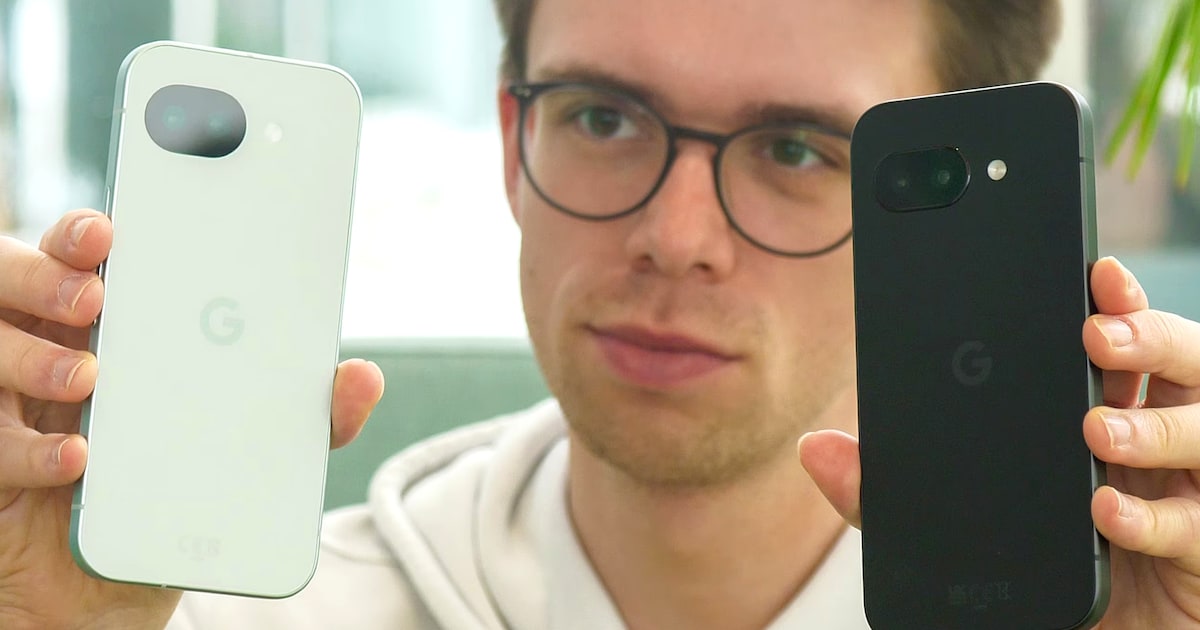

Although it is almost identical to its predecessor, the Google Pixel 10a surprises our testers with a significant upgrade that Google has so far kept secret. We research and ask questions.
Rarely have two successive smartphones looked as similar as this Google Pixel 9a (test) and this year’s Google Pixel 10a (test): same design, same cameras, same displays, same battery sizes and even the same processor. So our test results shouldn’t really differ much from those of last year’s model? We thought that too at the beginning.
But the Google Pixel 10a taught us otherwise. Because while the two cell phones are only marginally far apart in terms of performance, display and camera (probably also due to changed software), the difference in runtime is enormous. The Pixel 10a lasts an impressive three hours longer than its predecessor, despite having the same battery capacity and the same processor at its heart.
Google Pixel 10a offers a significant increase in battery
To put it into perspective: The CHIP test center has been checking the running times of all smartphones using the same scheme for years. For the sake of comparability, we set the refresh rate to 60 Hertz, set the display brightness to the usual indoor 200 nits and let the smartphone automatically run everyday tasks such as texting, web surfing and streaming in the LTE mobile network. Until the display finally goes out.
Beyond the particularly long-lasting outdoor cell phones, the Pixel 10a holds up at the time of testing iPhone 17 Pro Max (test) the record value of 27:14 hours. The Samsung Galaxy S26 Ultra (test) manages 20:51 hours and that Google Pixel 10 Pro XL (test) sets the pixel peak at 17:06 hours – at least so far. The Google Pixel 10a clearly overtakes its device family in the test with a result of 19:52 hours. This makes it the first choice for anyone interested in Pixel who places particular value on a strong battery.
Even with the same current software version, the actually identical Pixel 9a only lasts 17 hours. How can that be? We also asked Google this question. The answer:
“This is due to improvements in both software and hardware, including an updated modem.” – Google
However, what exactly is behind the modem updates remains unknown. When comparing the technical data, the upgrade from Bluetooth 5.3 to Bluetooth 6.0 and the addition of the satellite emergency call are particularly noticeable. Although neither of these are used during our runtime test, there could still be indications that the hardware has changed and that ultimately results in better runtimes.
Either way, we shouldn’t forget a controversial battery function of current Google Pixel cell phones: After 200 charging cycles, the charging voltage and the maximum usable capacity are automatically reduced in order to improve the long-term durability of the battery. More on this in our detailed Test of the Google Pixel 10a.

Google Pixel 9a vs. 10a: Which Should You Buy?
When the Google Pixel 10a is released in March 2026, the mid-range smartphone will be available at a manufacturer’s price of 549 euros. The Google Pixel 9a, on the other hand, is available in many places for around 200 euros less. And that with almost identical technology.
Apart from the emergency call function and the expected one-year extension of the update guarantee, there are no real arguments for the surcharge. The battery improvement may seem drastic in our test. But if you switch to the 5G network, set the refresh rate to a smooth 120 Hertz and use GPS to navigate or take photos of your surroundings, you should notice significantly less of the upgrade.
When the Google Pixel 10a goes on sale, we recommend buying its direct predecessor. However, if the two come closer in price over time, the new addition is also worth considering. However, we wouldn’t pay more than around 50 euros extra for the upgrade – not least in view of the current great lineup Smartphones for under 500 euros in the test.
More articles about the Google Pixel
About the Author