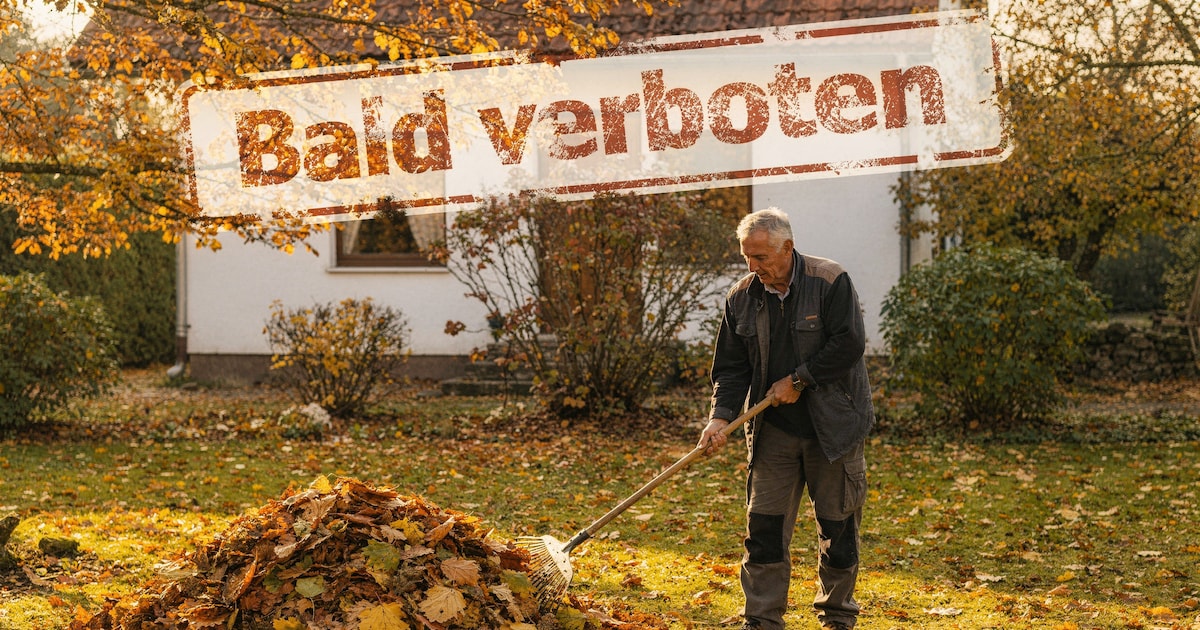
Quickly burn the leaves – from April this will be over in many communities. More and more federal states are banning gardening completely.
Garden owners in many communities are allowed to burn their leftover leaves and green waste until the end of March. Like that Circular Economy Act (KrWG) Since 2015, the burning of garden waste has been banned nationwide in principle – but federal states, districts and individual municipalities are allowed to allow exceptions. These exceptions are often limited in time: until March 31st, sometimes until April 15th, then it ends.
The reason lies in the Environmental protection: Garden fires have a significant impact on air quality and destroy valuable biogenic raw materials. In Saxony-Anhalt, for example, burning is allowed in many communities until March 31st – anyone who does it after that risks a fine. Composting, the organic waste bin or the recycling center are the legal alternatives.

chip newsletter
CHIP Household & Garden
Once a week we tell you the best household tricks, what work needs to be done in the garden and what mistakes you should avoid.
Mecklenburg-Western Pomerania goes even further – a total ban from 2029
The direction is even clearer in Mecklenburg-Western Pomerania: Minister Dr. Till Backhaus has announced that it will completely ban the burning of garden waste from January 1, 2029. The reason is to adapt to federal waste law and to protect the air and climate.
This is not an isolated case. More and more communities nationwide tighten their regulations. Combustion not only destroys air quality, but also valuable compost raw material, which in modern circular economy models belongs back in the ground – not in the air.
It is sometimes difficult to understand who is allowed to burn now and when not. Gardeners should therefore check the regulations of their municipality or district before lighting. Anyone who ignores the regulations risks fines and complaints from residents.
Conclusion: Take advantage of March if your municipality allows it – from April onwards it will be expensive in many regions. However, the better alternative is called Composting: This creates valuable fertilizer instead of air pollution. If you don’t have access to compost, you can find a legal solution in an organic waste bin, recycling center or municipal compost facility.
About the Author