
In spring, dust from the Sahara moves over Germany and leaves behind more than just an unusual color in the sky. An expert now urgently warns against doing homework during this time.
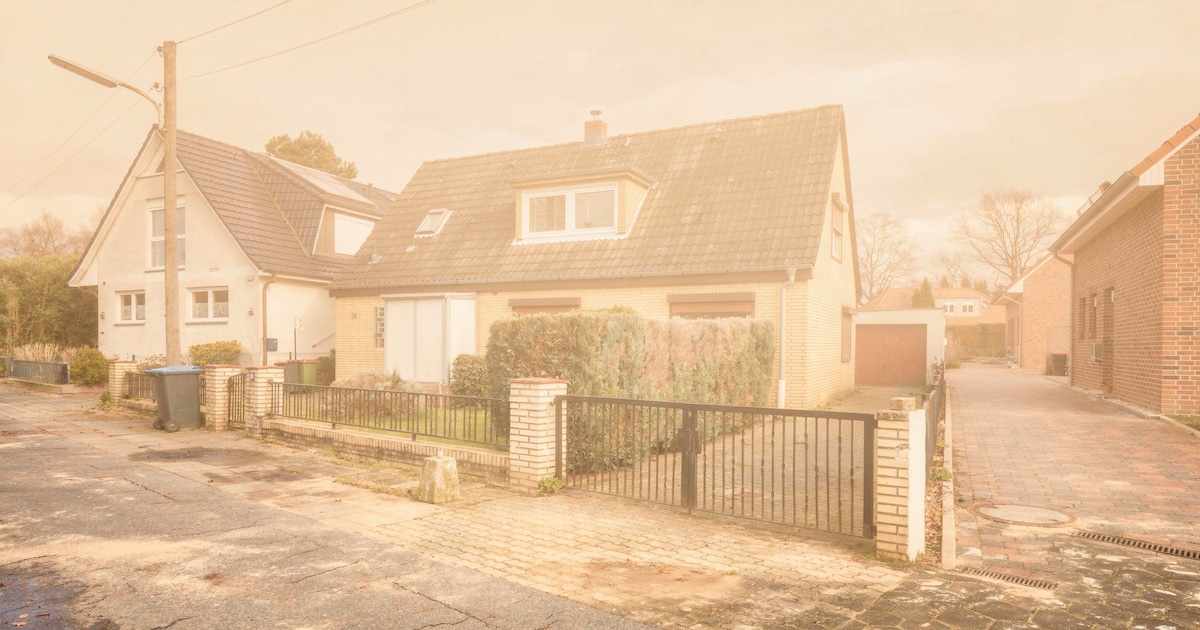
The sky over North Rhine-Westphalia currently appears cloudy, milky and strangely muted – although the sun is actually shining. The reason for this lies more than 4,000 kilometers away: a cloud of dust is on its way from the Sahara to Central Europe and is currently settling over North Rhine-Westphalia, like this daily news reported. What looks spectacular has consequences, especially for windows, glass surfaces and people with sensitive respiratory tracts. And a common reflex in this situation is exactly the wrong thing: to “quickly” clean the windows dry.
How desert dust comes to NRW
A stable south to southwest flow is responsible for the dust veil over the Ruhr area, the Rhineland and large parts of North Rhine-Westphalia. It directs warm air masses from the Mediterranean and North Africa to the north. Huge amounts of fine sand particles from the Sahara are whirled up at an altitude of several kilometers and transported via Spain and France to Germany.
Meteorologists at the German Weather Service (DWD) regularly observe such situations, especially in spring and summer. Graduate meteorologist Marco Manitta explains that the coming days will continue to be mild, but “no longer as completely sunny” as they were Westphalian Gazette reported. There is a simple reason for this: Saharan dust sits in the atmosphere like a filter. The sunlight is scattered by the dust particles, making the March sky appear whitish and milky instead of clear blue.
The biggest mistake: wiping the windows dry
Visually, the coating on the windows often looks like normal street dust or pollen. In reality, Saharan dust is more problematic: the tiny, sharp-edged grains of sand act like fine sandpaper on glass.
If you wipe the windows dry, the particles are pressed across the surface. This creates micro-scratches that are barely visible at first, but appear as matt streaks when the sun is low or backlit. These traces are permanently “ground” into the glass.
Many people react reflexively when they see the film of dust on windows or balcony doors: get a microfiber cloth, wipe it vigorously and hope that the window shines again. It is precisely this behavior that can permanently ruin glass.
Expert Rüdiger Elias, building cleaner from Bochum, warns in an interview with Westphalian Gazette expressly warn against proceeding in this way with Sahara dust. In his experience, in particular Toughened safety glass (ESG) extremely sensitive. This type of glass is used in many modern buildings, for example in large balcony doors, floor-to-ceiling windows, glass balustrades or shower enclosures. For building cleaners, ESG in conjunction with Sahara dust is “the final enemy,” says Elias, because visible scratches can be caused by just a few incorrect wiping movements.
The mechanism behind it is always the same: dry cleaning pulls the dust across the surface using pressure. Every movement acts like a tiny grinding process. The drier the cloth and the higher the pressure, the greater the risk. Even seemingly gentle aids such as kitchen paper are problematic because they scratch easily and do not pick up the particles, but push them along.
chip newsletter
CHIP Household & Garden
Once a week we tell you the best household tricks, what work needs to be done in the garden and what mistakes you should avoid.
Correct approach: Lots of water, little pressure
To clean glass surfaces after a Sahara dust event, experts recommend a different approach: not rubbing, but rinsing. At the heart of this is a principle that Elias emphasizes again and again: First wash away, then clean.
The first step should be to rinse the dust from the window with plenty of water. Outside, you can use a garden hose, a watering can or a bucket of water that is slowly poured over the glass. Inside, a well-soaked sponge can help, just gently moving it over the surface without building up pressure. This means that many particles are already released without being dragged across the glass.
Only when the coarse dust has been removed does the actual cleaning begin. All you need is lukewarm water with a mild glass cleaner or a neutral cleaning agent. A soft sponge or scrubber distributes the water evenly. The disc is then pulled off from top to bottom using a puller. The remaining moisture can be absorbed with a soft, slightly damp cloth – without vigorous polishing.
What is crucial is that you should never dry rub a disc that is still dusty. Any attempt to “quickly” touch up a spot using dry means brings back the risk of scratches.
Cleaning windows in Sahara dust: Why it’s worth waiting
As understandable as the desire for clean windows is: in an active Sahara dust phase, patience is often the most sensible strategy. Because as long as the air flow from the southwest continues, new amounts of dust can continue to appear. If you put a lot of effort into cleaning all your windows today, you might see the next fine coating tomorrow.
Meteorologists therefore advise keeping an eye on weather developments. Such an episode often ends with the air flow changing or rain starting. Precipitation washes the dust out of the atmosphere, the air becomes clearer and the sky becomes bluer again. At the same time, a heavy rain shower works like a natural “pre-cleaning” for window panes: some of the dust is already carried away by the rainwater. The subsequent glass cleaning is then not only less time-consuming, but also more gentle on the material.
So if you don’t necessarily have to act immediately, it’s usually better if you wait until the dust phase has ended before thoroughly cleaning your windows – ideally until after the first heavy rain.
About the Author