With the new Buildings Directive, the EU is tightening the obligations for energy certificates. But experts are skeptical as to whether Germany will be able to implement it by the end of May.
From May the rules for new energy certificates in the EU will change; this is the subject of the EPBD Directive (Energy Performance of Buildings Directive, EU Buildings Directive).
This has concrete consequences for many owners, especially if they want to sell, rent, or modernize their property. But there are also changes for tenants. The directive specifically states:
“The energy efficiency certificate must comply with the new requirements by May 29, 2026.”
Important: The new requirements only apply to newly issued energy certificates. Existing ID cards remain valid for ten years. Although the EU rules must be implemented into national law by May 29, 2026 at the latest, old energy certificates will remain in circulation for several years.
However, experts doubt whether Germany can keep the deadline. Because implementation requires an adaptation of the Building Energy Act. The first details are expected in spring 2026.
New efficiency classes: A to G instead of A+ to H

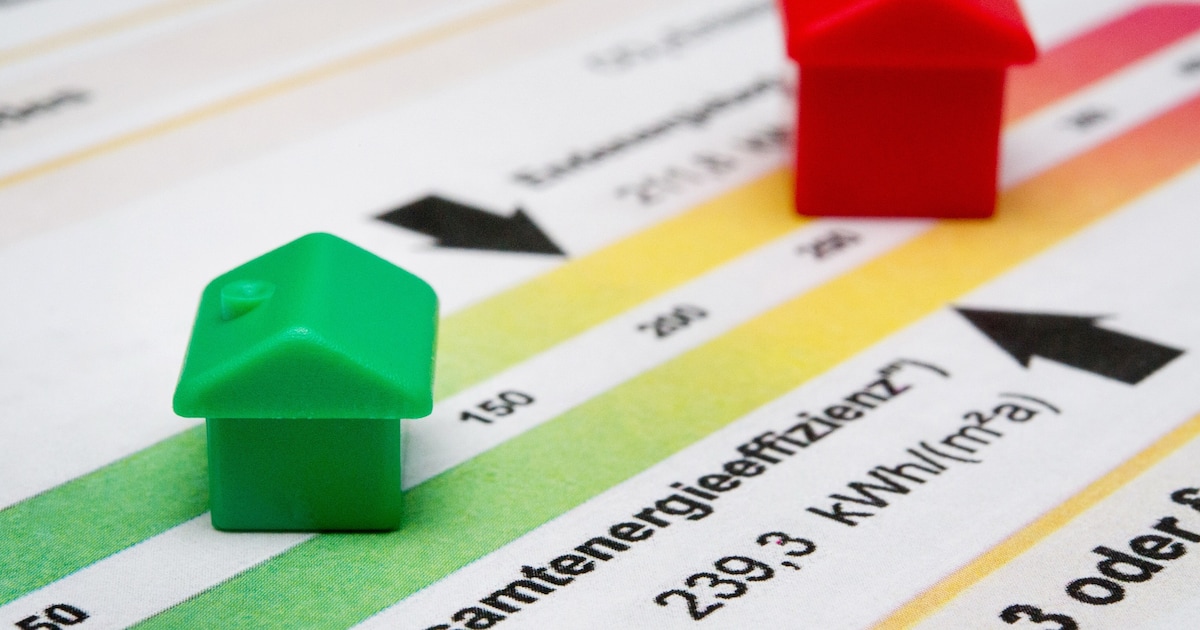
The future EU-wide energy certificate will bring with it a new rating scale. Instead of the previous classes from A+ to H, the scale now extends only from A to G.
- In the future, Class A will only be reserved for zero-emission buildings.
- Class G identifies the 15 percent of the building stock with the worst energy efficiency.
- The remaining buildings will be evenly distributed between classes B to F.
Each EU country sets the exact limit values itself. Visually, everything remains familiar: green stands for energy efficient, red for poor values.
New obligations for the energy certificate

An energy certificate has already been required when a building is sold, rented or leased. This remains the case: valid ID must be presented at the first viewing at the latest. Certain parameters must also be mentioned in real estate advertisements.
New from May: An energy certificate is also required
- when extending rental agreements,
- for larger renovations, for example when
- more than 25 percent of the building envelope is renovated or
- the measures exceed a quarter of the building value.
Anyone who does not present an energy certificate or provides false information is at risk under the Building Energy Act Fines of up to 10,000 euros. Exception: Owner-occupiers still do not need an energy certificate.
Consumption certificate vs. requirement certificate: These are the differences

The new rules apply to both types of energy certificates:
- Certificate of need: It determines the energy requirements of a building based on technical data, such as construction, insulation standards, windows, and heating. An on-site expert assessment is necessary for its creation. It is considered to be much more informative than the consumption certificate and is required by law in many cases.
- Consumption certificate: It shows the actual energy consumption of a building. The basis is the heating cost and consumption data from the past three years. How energy efficient a property is classified depends heavily on the usage and heating behavior of the residents.
But in addition to the legal framework, there is another thing that could become complicated: the new energy certificates should be completely digitalized.
Member States must therefore also set up central databases in which ID cards are stored in machine-readable form and can be publicly accessed by tenants, buyers, and authorities.
About the Author