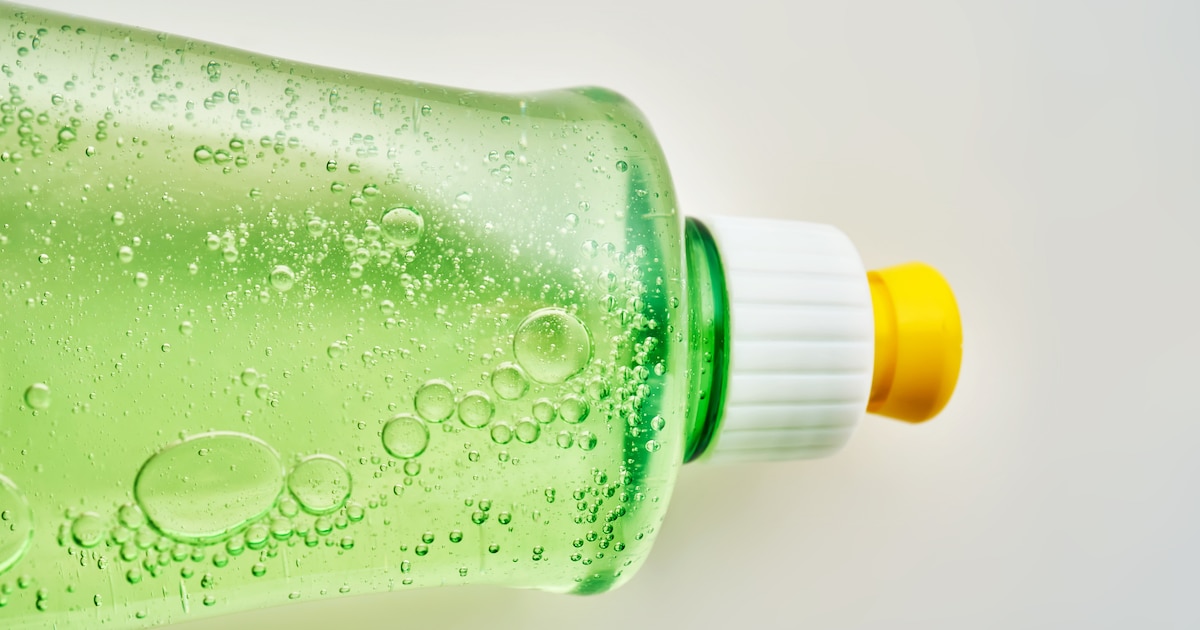
Can normal dishwashing liquid remove limescale and urine scale in the toilet—and does it even have a chance of preventing blockages in the toilet pipe?
Dishwashing liquid is primarily a grease and dirt remover because it works with surfactants. For everyday toilet use, this means it removes fresh, rather “greasy-organic” deposits and makes scrubbing with a brush easier. That also fits the classification of the consumer advice center, which classifies hand dishwashing liquid as a basic cleaner for greasy dirt.
In practice, this works in two main ways:
- A small splash of detergent directly into the basin; leave to act briefly, then brush and rinse.
- Or as a mini trick for the brush: put some detergent in the brush holder so that some cleaner will automatically work the next time you use it.
Dishwashing liquid can also be useful for minor blockages. Here it acts more like a “lubricating film” in combination with hot, not boiling, water. The tip not only appears in life hack articles, but also in DIY guides from major hardware stores.
Where dishwashing liquid fails – and what makes more sense
The limit comes where the toilet is really annoying: limescale and urine scale are mineral deposits. This usually requires acids, which is why classic toilet cleaners work with them. The Consumer advice center mentions vinegar cleaner or citric acid as suitable remedies for limescale and urine scale.
What is important is not so much the “hack” but rather safe handling: acidic toilet cleaners must not be mixed with cleaners containing chlorine because dangerous gases can be formed.
Conclusion: Dishwashing liquid is a useful helper in the toilet for quick freshening and sometimes even for minor blockages. When it comes to limescale and urine scale, there is usually no way around citric acid, vinegar cleaner or a real toilet cleaner.
About the Author