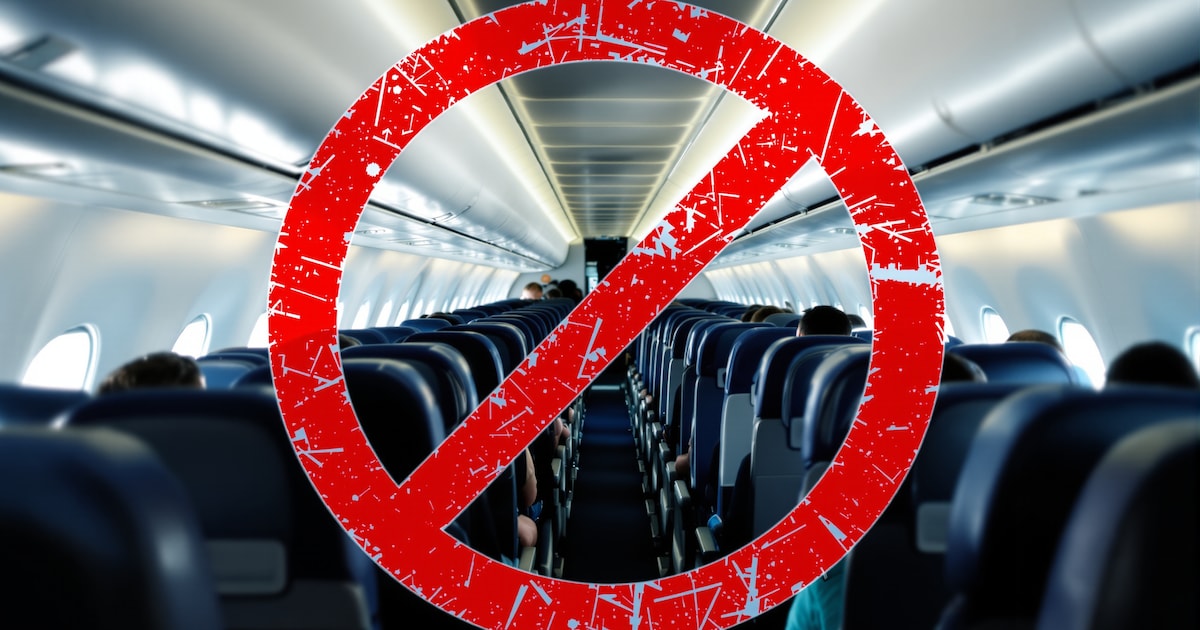
Loose batteries are considered an underestimated safety risk on board an aircraft. From January 15, 2026, the Lufthansa Group will therefore significantly tighten its rules for power banks.
Power banks are standard equipment for many travelers, especially on long-haul flights. But the small energy storage devices pose a risk: damaged or overheated lithium-ion batteries can cause fires. Against this background, airlines around the world are reacting with increasingly clear guidelines. The Lufthansa Group has now announced new rules that will apply from January 15, 2026 apply and significantly restrict the use of power banks on board.
Power banks: New requirements at Lufthansa
That is from the deadline Using or charging power banks during the flight is prohibited. A maximum of two power banks are permitted per passenger and may only be transported in hand luggage. It is prohibited to place items in checked baggage.
- in the seat pocket of the front seat
- on the body (e.g. in a bag)
- or in your carry-on luggage under the seat in front
Storage in the luggage compartments above the seats is not permitted. The same safety rules apply to e-cigarettes.
For power banks with a capacity of 100 to 160 watt hours (Wh), approval from the airline is required before travel. Devices with higher capacity are generally excluded. Medically necessary batteries may be exempt from the regulations.
The Lufthansa Group is following recommendations from international aviation authorities such as European Union Aviation Safety Agency and the Federal Aviation Administration around.

Why power banks are considered a security risk
Lithium-ion batteries can catch fire if there is a short circuit, mechanical damage or overheating. Such incidents can be identified and dealt with more quickly in the cabin than in the cargo hold. That’s why international safety guidelines have long stipulated that loose batteries should only be transported in hand luggage.
Power banks: This is how other airlines handle it
The Irish low-cost airline only allows power banks in hand luggage. Charging on board is not explicitly prohibited but depends on the aircraft’s power supply. Power banks are not allowed to be transported in checked baggage.
At British Airways, power banks up to 100 Wh do not require a permit; those between 100 and 160 Wh are only permitted with prior approval. Use on board is generally permitted unless crew instructions contradict it.
The Dubai airline allows power banks in hand luggage but expressly prohibits charging power banks during the flight. The same applies here: no transport in checked baggage.
Uniform rules? Not quite yet
Although the basic principles are similar—hand luggage requirement, capacity limits, and no transport in the hold—the details differ depending on the airline. The Lufthansa Group will be one of the stricter providers in the future, as it completely prohibits the use and charging of power banks.
Conclusion
With the new rules, the Lufthansa Group is significantly tightening its handling of power banks and is thus following international safety recommendations. For travelers this means less flexibility but more clarity. Anyone flying should always contact the respective airline in advance, as the regulations vary. This way you avoid hassle at the gate—and at the same time contribute to safety on board.
About the Author