[ad_1]
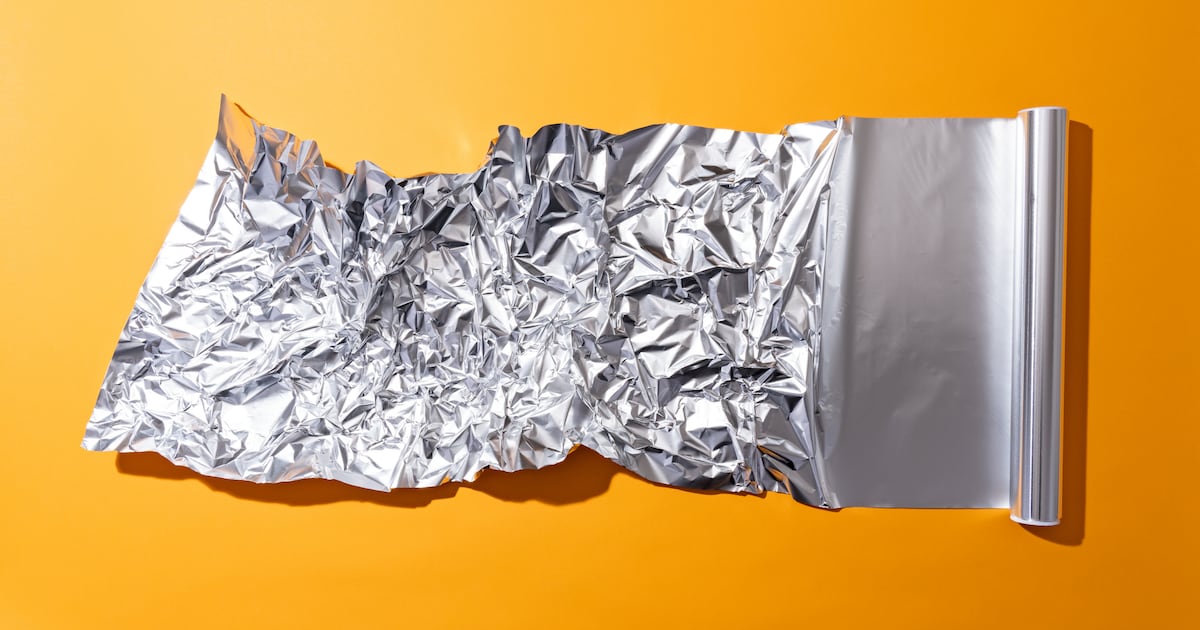
A piece of aluminum foil can solve many problems around the home. We show you the most helpful cases.
Aluminum foil is a kitchen aid in most households – for covering, wrapping or baking. But she can do more: Ludwigshafen24 describes several “life hacks” in which a small piece of foil can be practical in everyday life – for example when sharpening scissors or as a quick help with contact problems. At the same time, authorities warn against thoughtlessly using aluminum foil everywhere because aluminum can pass into food under certain conditions and metal is problematic in microwave operation.

1) Small immediate help for contact problems
When batteries in a remote control or small device no longer fit snugly, a tiny piece of aluminum foil can serve as a “contact amplifier” – not a replacement for a battery, but a conductive spacer. Ludwigshafen24 cites exactly this application as an example for on the go.
2) “Refresh” your scissors – at least for now
If scissors become blunt, it is often recommended to cut through folded aluminum foil several times. The Spruce describes this method as a quick, inexpensive way to make scissors cut better again (often by cleaning/smoothing the cutting edge rather than actual sharpening). However, this is no substitute for proper sharpening for permanently dull blades.
3) Cutlery shine in the dishwasher: works – with limitations
The trick of placing a loosely crumpled ball of aluminum foil in the cutlery baskethas been circulating for a long time. Ludwigshafen24 also names him. The Kitchn explains the effect as a chemical reaction that can be particularly visible on tarnished silver or certain deposits – not necessarily on normal stainless steel. Specialist articles also advise not to do this all the time so that no film particles end up in the filter.
4) Place aluminum foil in the dryer
With a simple trick you can increase the efficiency of your dryer and save on electricity costs – and all you need is aluminum foil. The idea behind that Aluminum foil trick is as simple as it is ingenious: Form a ball out of a piece of aluminum foil, about the size of a tennis ball. Place this ball in the dryer along with the wet laundry. With the next load you will notice that the drying time is shorter and your clothes come out of the device softer.
chip newsletter
CHIP Household & Garden
Once a week we tell you the best household tricks, what work needs to be done in the garden and what mistakes you should avoid.
5) Reflect heat: Behind radiators – but please do it correctly
Aluminum foil is often used as DIY “heat reflector” behind the radiator called. The Energy Saving Trust confirms the basic idea of reflector panels, but also warns: normal kitchen aluminum foil is not ideal (difficult to attach, no insulation, not designed for it). Special radiator reflector panels are better. If you do improvise, you should at least install it cleanly (not protruding into radiator parts) and not create any fire risks.
6) Place aluminum foil in the freezer
The idea, Use aluminum foil in the freezermay seem unusual at first, but it definitely has one practical basis. Many people are familiar with the problem: Before defrosting the freezer, the freezer is pressed until the individual compartments can no longer be pushed shut without force. The aluminum foil trick is intended to help: According to various users, the foil can actually help minimize the annoying ice formation in the freezer compartment.
7) Emergency “tools”: shaping, covering, improvising
A small piece of foil can be quickly formed: as a temporary cover (e.g. over a cup in a backpack), as a base for sticky things or as a short privacy screen/protection from dirt. Ludwigshafen24 sums up exactly this “all-rounder” property as the reason why a small piece of foil can be helpful on the go.
Aluminum Foil: Two Safety Rules You Should Know
1) Not for acidic or salty foods – especially not for storing or heating
The Federal Institute for Risk Assessment (BfR) writes that aluminum from aluminum foil and uncoated aluminum bowls can migrate into food, especially when foods contain acid and salt. Therefore, you should not store such foods in aluminum foil or heat/keep them warm in it.
2) Usually not a good idea in the microwave
The US Food and Drug Administration (FDA). notes that metal and aluminum foil can reflect microwaves – causing uneven heating and possible damage to the device.
[ad_2]
About the Author