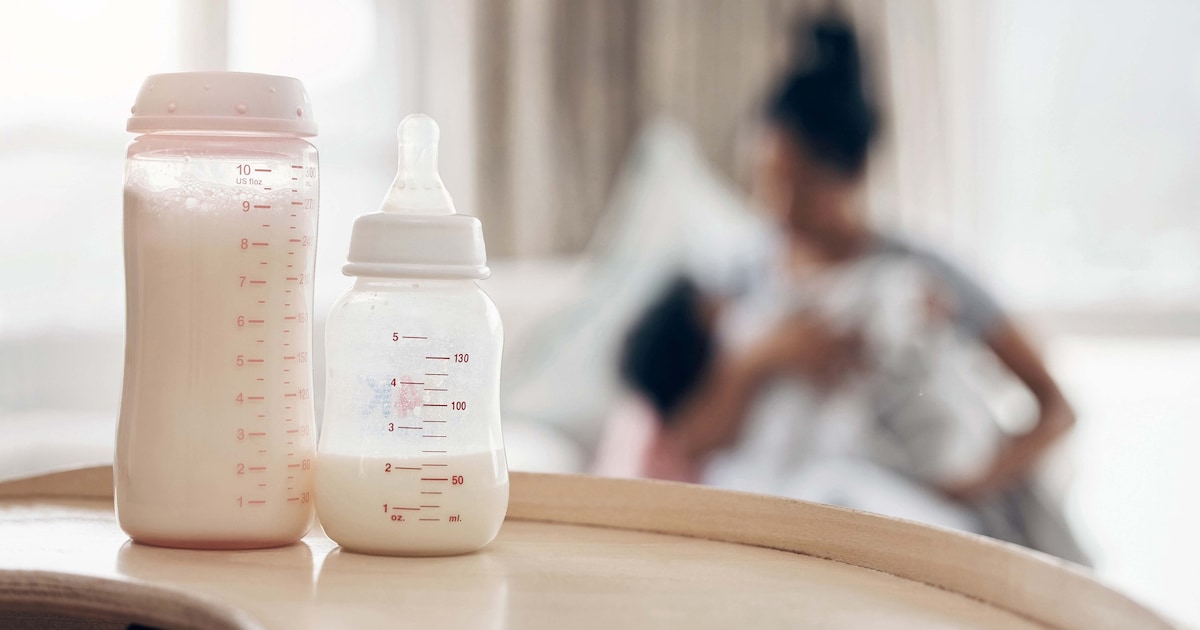
Baby bottles were tested by ÖKO-TEST, and not all of them were free of harmful substances. Read which bottles can be used safely.
Baby bottles are part of everyday life for many families. But studies by ÖKO-TEST in the Issue 02/2026 show that not all products are harmless. Harmful substances were detected in some bottles and teats. Of all things, two well-known brands stand out negatively. It is important for parents to know which products can be used safely and which should be avoided.
This is how ÖKO-TEST tested
ÖKO-TEST tested 14 plastic baby bottles (120-180 ml) and matching teats from drugstores, specialist shops, and online retailers. The prices were between 2.45 and 12.50 euros for bottles; replacement teats cost between around two and ten euros. All products are suitable for newborns.
The laboratories tested the vials for BPA, PAHs, heavy metals, as well as volatile substances, formaldehyde, and siloxanes. The latex vacuum cleaners were tested for carcinogenic nitrosamines. In addition, a practical laboratory tested the tear strength of the teats and the heat resistance of the bottles. The packaging was checked for environmental and safety information, and manufacturer claims such as “BPA-free” were compared with the analysis results. Missing information on material and suitability for microwaves, freezers, or dishwashers was requested directly from the manufacturers.
Cheap baby bottles can be convincing
ÖKO-TEST shows that parents can choose from a good selection of recommended baby bottles: nine models were rated “very good.” Cheap bottles are available from just two euros. One of the test winners is the Babylove wide neck bottle from dm, which is available for this price. It was also rated “very good.” Philips Avent Natural Response baby bottle for about ten euros. Both products are free of harmful substances, passed all material tests, and had no other defects.
All bottles impress in the practical test
There were consistently positive results in terms of material properties: all of the baby bottles tested easily withstood the stress of rapid temperature changes. The teats also passed the tear resistance test, which the practical laboratory used to simulate the everyday stresses of sucking and chewing. With the nine “very good” models, parents can feed their babies safely and without hesitation.
BPA in baby bottles
Bisphenol A (BPA), a chemical that is used, among other things, for polycarbonate plastics, has been banned in baby bottles since 2011 because it has a hormonal effect and is toxic to reproduction. From July 2026, even stricter limits of 1 µg/kg will apply to BPA and similar substances. ÖKO-TEST is already based on this:
BPA was detected in three bottles and one teat in quantities that exceed the future limit value. All four products also incorrectly advertise “BPA-free.” It is probably not an intentional addition but rather contamination, for example, from packaging made from recycled paper, which is exempt from the BPA ban. Although laboratory analyses show that boiling can reduce BPA levels, the responsibility for safe materials and production processes lies with the manufacturers and not with the parents.
Suspected naphthalene discovered in two baby bottles
In the laboratory, it was in the Nip wide-mouth bottle. Cherry Green, floral naphthalene, was detected, a polycyclic aromatic hydrocarbon (PAH) that is suspected of causing cancer. PAHs are formed during combustion processes, for example, in industrial plants or in road traffic, and can now be found almost everywhere in the environment.
Nevertheless, the manufacturers’ quality management should ensure that products for small children in particular are free from such harmful substances. The bottle also performs poorly because of the increased BPA levels. Overall, it received an “unsatisfactory” rating and was one of the two test losers.
Important information is missing on some packaging
Baby bottles are subjected to a lot of wear and tear in everyday life: they are cleaned, warmed, cooled, chewed on, or even dropped. It is therefore important that parents pay close attention to the safety instructions.
For some brands, there was no information on the packaging or in the product information that no straps or cords should be attached to the bottle, as they could cause a baby to strangle themselves. In addition, it was not pointed out that the vacuum cleaner should be checked before each use and replaced immediately if there is even the slightest damage.
About the Author