[ad_1]
March often determines how thick and strong the lawn will grow in the coming months. Now the main thing is to recognize damage from the winter, not to stress the soil too early and to take the right care steps in the right order.
If you want a lush, even lawn, you shouldn’t just blindly start using fertilizer, scarifier or lawn mower in March. The first thing to do is to take a close look at the area: Is there moss, bare spots, compacted areas or soil that is still too wet? Specialist sources, such as Redactie24, recommend not starting spring work until the ground has dried sufficiently and the grass is visibly growing again.
First check, then maintain
Before you do anything, you should take a close look at the condition of your lawn. Look for yellow spots, flattened stalks, moss, thatch and gaps in the turf. Soil moisture also plays an important role: If the subsoil is still very wet, entering or working on it early can do more harm than good because the soil is additionally compacted. This is exactly what the article mentioned as a template points out.
Wait until growth begins before mowing for the first time
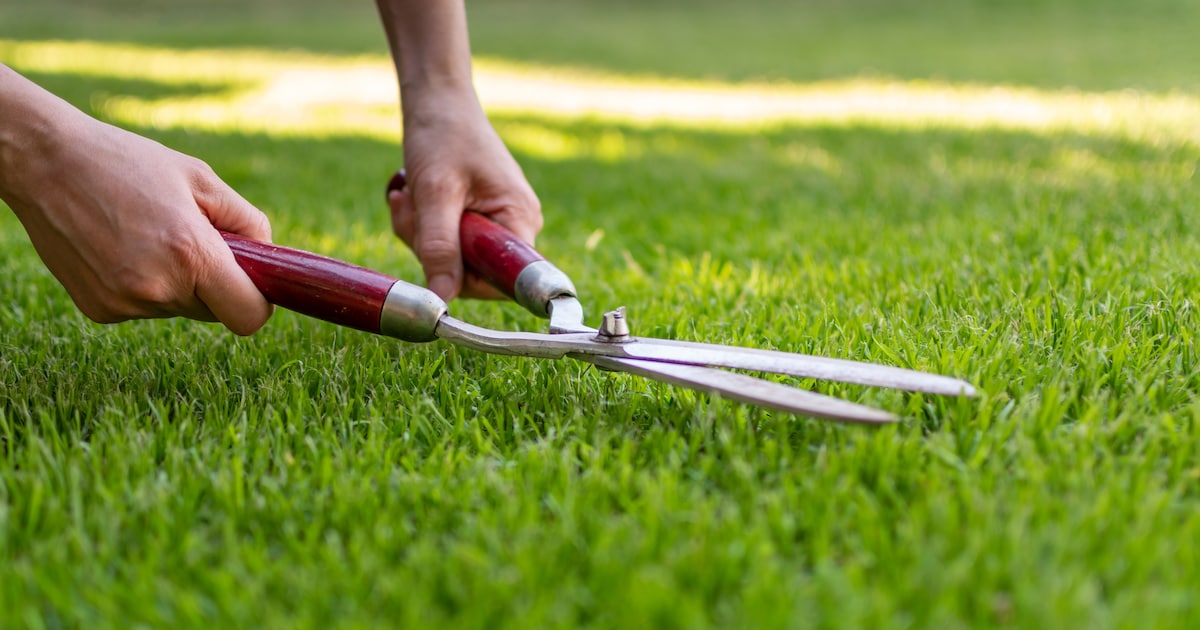
The first cut of the year should not be based solely on the calendar, but rather based on growth. The Royal Horticultural Society recommends starting regular mowing in the spring as soon as the grass grows again. Other gardening sources also cite March or April as a typical start time, provided temperatures become more stable. Don’t cut too deeply at first: a slightly higher cut protects the lawn after the winter.
Do not start scarifying too early
Many hobby gardeners want to scarify immediately in March. This can be useful if there is a lot of moss and thatch. Redactie24 recommends scarifying in March to remove moss and dead material and to better supply the soil with air, water and nutrients. At the same time, other gardening sources point out that scarifying too early can be problematic if the lawn is not yet growing vigorously enough. Then the area recovers more poorly and becomes more susceptible to gaps and weeds.
Reseed bare spots now
Spring is a good time to touch up gaps or bare areas. If you roughen the affected areas slightly, reseed evenly and press down the seeds carefully. A thin layer of soil or compost can help protect the seeds from drying out. It is then important to keep the areas evenly moist so that the reseed germinates well.
Fertilizing can make sense in late March
If your lawn seems weak after the winter, spring fertilization can help. The RHS recommends a nitrogen-focused spring fertilizer in late March if necessary to stimulate growth. The same applies: don’t overdo it. Experts recommend a targeted, moderate application rather than too much fertilizer in order to strengthen the lawn without causing unnecessary environmental pollution.
The order is important
Several sources emphasize that the care steps should not be randomly mixed up. A sensible sequence is: first remove winter residue and leaves, then check the condition, fertilize if necessary, then mow and scarify only if the lawn is actually actively growing and is heavily matted. Heavily compacted soils can then benefit additionally from sanding.
[ad_2]
About the Author