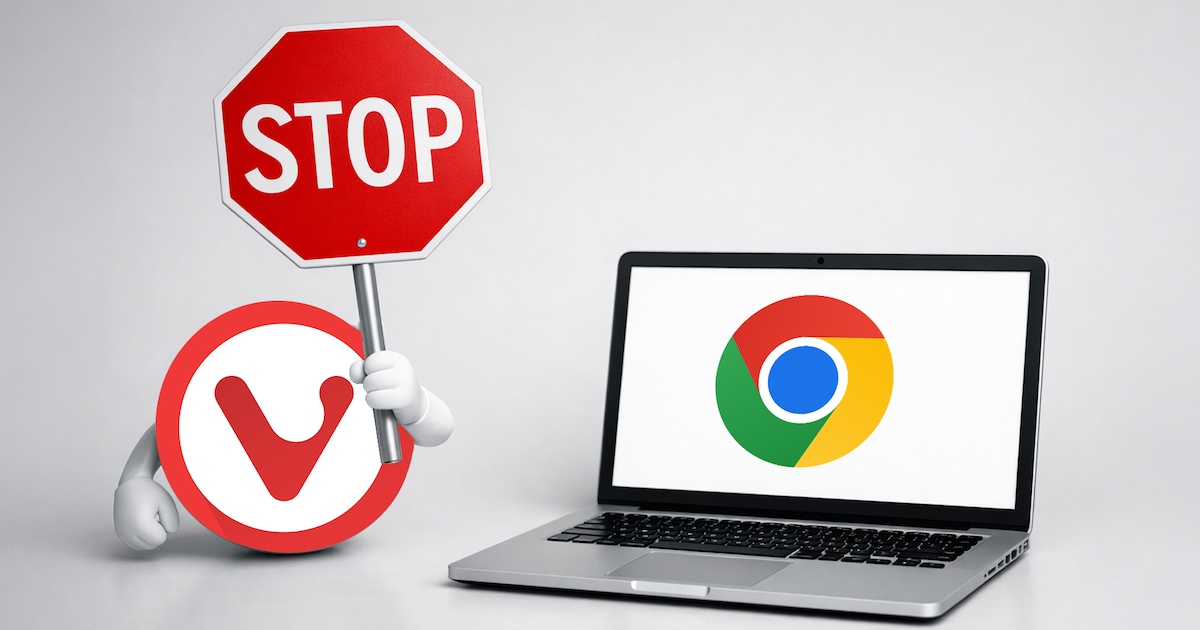
While the major browsers rely entirely on artificial intelligence, the developers at Vivaldi want to take a completely different approach.
While Google, Microsoft, and Apple are increasingly equipping their browsers with AI functions, the European browser manufacturer is leaving Vivaldi with his browser to consciously take a different path.
With version 7.8 Vivaldi Technologies does not focus on artificial intelligence but rather on the abilities of the users. A press release states:
“Vivaldi gives the middle finger to AI assistants.”
The focus is on tools that make productive work in the browser easier—without algorithms that filter, summarize, or evaluate content. You can try out these features directly with our download:
This is what Vivaldi wants to offer instead of AI

Vivaldi Technologies wants to rely on human intelligence with the browser and equip users with practical tools. “The entire industry is trying to solve the wrong problem. They’re building assistants that filter what you see and what you don’t see,” says Jon von Tetzchner, CEO of Vivaldi Technologies.
- Drag-and-drop tab tiling: This lets you instantly create split-screen layouts by dragging tabs into your workspace. Compare prices, monitor live data, and read reference documents without interrupting your workflow. While Chrome and Edge can only display two tabs side by side, Vivaldi supports unlimited, flexible grid layouts.
- Open the link as a tiled tab: Right-click any link to open it alongside your current content. Your main tab remains visible, making multitasking easier.
- Smarter pinned tabs with domain restriction: Pinned tabs now enforce domain boundaries; your email tab stays with email, your project tool stays with the project. No more accidental navigation messing up your pinned tab settings.
- Cross-window email access: Vivaldi’s built-in email client now works in all browser windows and workspaces. Email becomes a true part of the browser and is always available without having to switch between windows.
About the Author