[ad_1]

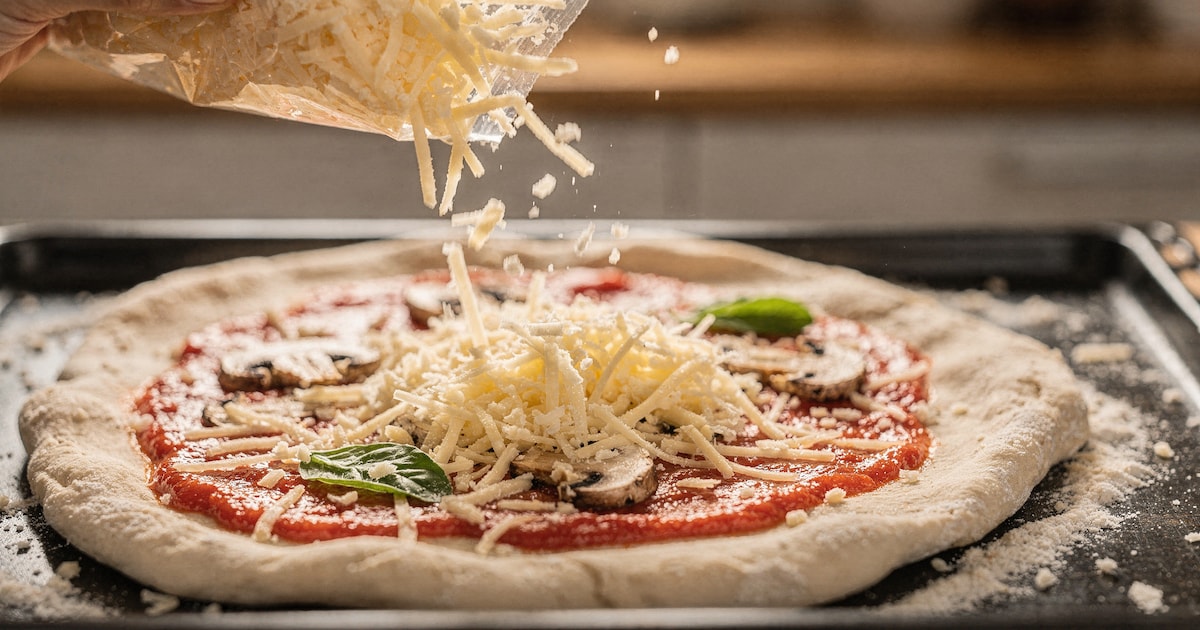
Ready-grated Emmental cheese from the bag always ends up on casseroles, gratins or pizza. SWR “Marktcheck” has now worked with WDR to check what is really in the bag and which variety is convincing when baked
Grated cheese in the supermarket: Five products, big price difference
The focus of the test by SWR Marktcheck and WDR (broadcast from February 2026) stood grated Emmental cheeseone of the most popular gratin cheeses. Five products from supermarkets and discounters were compared:
- “Yes!” (Rewe)
- “Good & Cheap” (Edeka)
- Milsani (Aldi)
- Milbona (Lidl)
- Organic grated cheese from Alnatura
In terms of price, the four conventional brands are close to each other – around 0.72 euros per 100 grams. The organic Emmental cheese from Alnatura is clearly out of the ordinary: at 1.66 euros per 100 grams, it costs more than twice as much.
The key questions in the test: How hygienic are the products? Which additives are in the cheese and which Emmentaler scores well when gratinated?
Laboratory check: Germs in grated cheese – how big is the risk really?
Grated cheese is considered particularly sensitive when it comes to germs. This is because the surface area of the many small cheese fibers is large and bacteria or mold can easily settle there: especially if the cold chain is not consistently maintained. If the cheese becomes too warm while traveling or in the refrigerator at home, pathogens can multiply rapidly within a short period of time.
To find out how high the risk really is, all five Emmentaler varieties tested were sent to an independent laboratory. Typical food germs were examined there, including salmonella, E. coli bacteria, certain types of staphylococci and various molds. They all have one thing in common: If they occur in large numbers, they can cause symptoms such as stomach cramps, diarrhea or vomiting. People with weakened immune systems, such as small children, older people or people with previous illnesses, are particularly at risk.
To be on the safe side, two samples of each type of cheese were analyzed. The The result is clear: Problematic germs could not be detected in any of the samples examined. Neither salmonella nor noticeable E. coli contamination or mold played a role in the test. From a hygienic point of view, all grated Emmental cheese was unremarkable. Provided they are stored in a cool place as intended and consumed on time.
chip newsletter
CHIP food & drink
Once a week we deliver the latest tests, advice and news on household appliances, food trends, recipes and changes in the supermarket.
Small print: Starch as a release agent and an exception
When you look at the list of ingredients, there are differences that you hardly expect at first glance. Starch is used as a release agent in all four conventional products. It prevents the cheese from clumping in the bag and ensures that it remains loose and can be spread.
In the test, nutritionist Antonia Brandstädter from the consumer advice center classified starch as a highly processed ingredient. For most people, this is not a health risk, but it turns a natural product into a more processed food. Since it is corn or potato starch, the exact origin does not necessarily have to be stated. There is hardly any relevance here for allergy sufferers. Wheat starch, which can be allergenic, was not found in any of the cheeses tested.
Only one product can do without this release agent: the organic grated cheese from Alnatura does not contain starch.
Salt content: Organic cheese, of all things, is at the forefront
A further look at the nutritional value field brings a surprise: the highest salt content is found in organic cheese.
- Alnatura organic Emmental cheese: 1.2 g salt per 100 g
- Other products: between 0.5 and 1 g of salt per 100 g
The German Society for Nutrition (DGE) Adults recommend a maximum of 6 grams of salt per day, and the WHO only recommends 5 grams. The salt content is therefore not insignificant for cheese, which is often sprinkled generously over casseroles.
Alnatura explains the value to SWR Marktcheck by saying that the cheese is placed in a salt bath during the production process and thus absorbs salt. No additional salt is added later. Brandstädter still recommends: If you often eat salty cheese, you should use salt more sparingly for the rest of your meal and consciously compare the nutritional tables.
Taste test: Lidl in front, Rewe in the back

In the blind test, a clear ranking quickly emerged in the bistro run by restaurateurs Gus Dejoie and Jowita Jezuit. The two experts evaluated each cheese according to taste, melting and consistency after baking, i.e. exactly how it would later end up on the plate in onion soup, croque or gratin. The result:
- 1st place: Milbona (Lidl)
Spicy, slightly nutty, good melting, nice threads. The surface becomes crispy, but the cheese remains creamy underneath. - 2nd place: Alnatura organic Emmental cheese
Visually very appealing, rather mild in taste, solid consistency. - 3rd place: “Good & Cheap” (Edeka)
Mild, but harmonious, still pulls strings, overall decent. - 4th place: Milsani (Aldi)
Although it becomes crispy, it seems drier and the cheese lacks the creaminess. - 5th place: “Yes!” (Rewe)
It tastes bland in comparison and the consistency is described as slightly rubbery.
This surprisingly puts a cheap discount cheese at the top.
Test conclusion: More expensive is not automatically better
The test shows:
- Hygienic All grated cheeses tested were unremarkable and germs were not a problem.
- Additives like starch are found in all conventional products, only organic cheese does not need it – but it has it highest salt content in the field.
- At the The taste and when gratinating Milbona from Lidl clearly ahead and even beats the much more expensive organic Emmental.
For consumers this means: price, brand or organic seal say little about how grated Emmentaler behaves in the oven. Those who value as few additives as possible are more likely to choose organic. According to this test, if you are looking for the best mix of price and gratin result, you should find it at the discounter.
[ad_2]
About the Author