[ad_1]
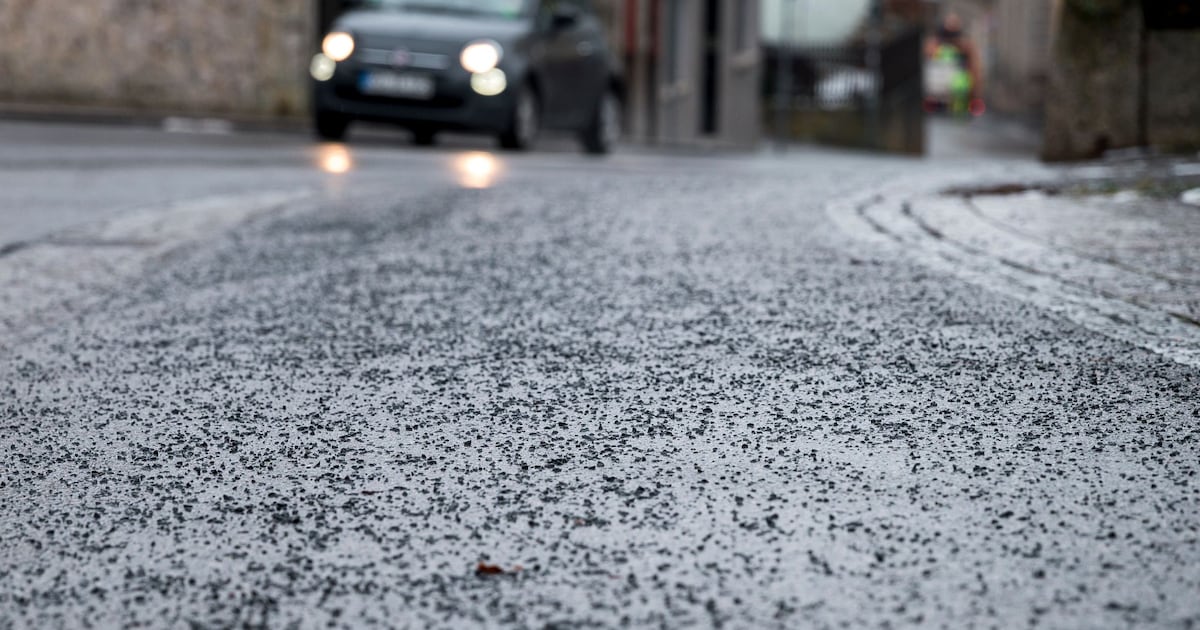
Gritting materials often remain on sidewalks and streets after the winter. But who is actually responsible for the removal?
Does it bother you in the shoe? If leftover grit gets caught in sneakers or other shoes, it can be quite annoying. Then you have no choice but to stop, take off your shoe and remove the offending material.
But the question arises: Shouldn’t the grit have been removed long ago after the ice and snow melted?
This is what a lawyer says about it.

“Basically, the removal of grit is one of the duties of winter service“, explains in-house lawyer Daniela Niermann from the owners’ association Haus & Grund Germany.
This task usually lies with the property ownerswhich border sidewalks. You are responsible for ensuring that pedestrians can use the paths safely.
This means: As soon as the temperatures rise and the grit is no longer needed, owners have to remove materials such as grit, sawdust, granules, sand or ash. If the property is rented, you can fulfill this traffic safety obligation – including the disposal of the grit – through a transfer the corresponding regulation to their tenants in the rental agreement.
What deadlines apply?
In contrast to spreading the grit, there is usually less time pressure when removing it. Daniela Niermann points out that this is the case no fixed rules gives.
However, it is advisable not to wait too long after the thaw begins to clear it. As part of the traffic safety obligation, both owners and tenants must ensure that passers-by do not slip on leftover grit. If this duty is neglected, This can lead to claims for damages in the event of an accident.
Important to know: “Grit can be disposed of in normal household quantities via household waste bins“, explains Daniela Niermann. If this is not permitted in individual cases, a corresponding note on the packaging be found. For larger quantities, Niermann recommends contacting the responsible local waste disposal company.
[ad_2]
About the Author