[ad_1]
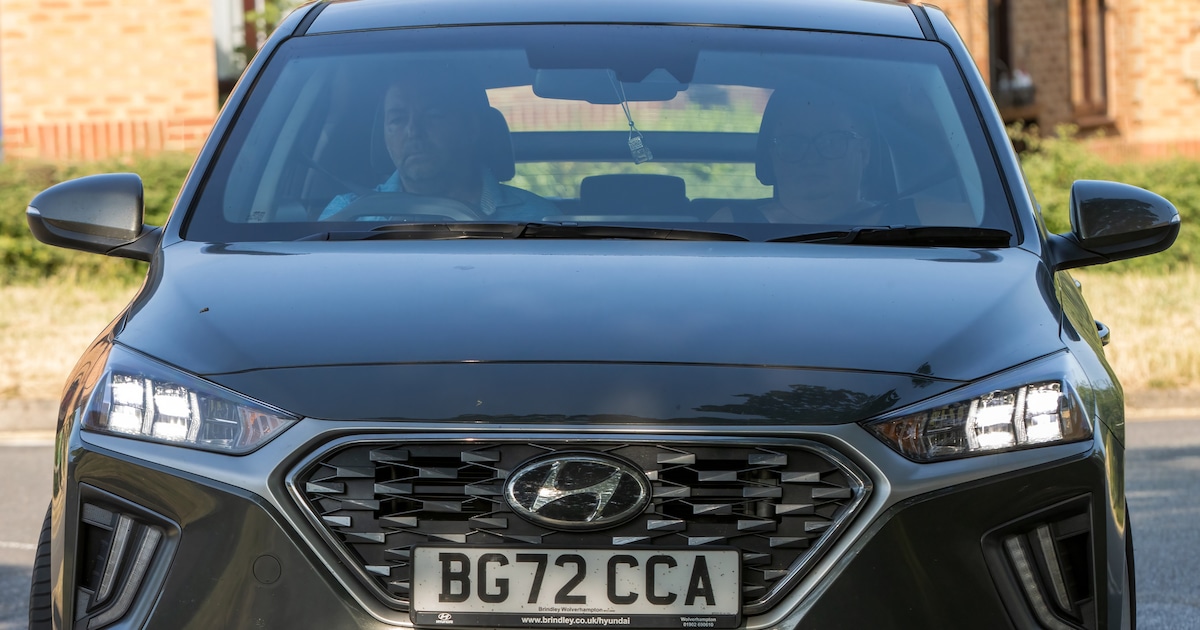
A Hyundai Ioniq Electric with over 320,000 kilometers of mileage initially seems like a risk. However, what is most important is the condition of the high-voltage battery.
The in the video by YouTuber Bjørn Nyland The car tested has clearly had a hard life: worn seats, small rust spots, a body that is no longer completely fresh. Technically, he hasn’t been spared either. The onboard charger was defective and was repaired before the car was ready to drive again. However, the appearance is less important than the condition of the high-voltage battery.
YouTuber conducts practical test under everyday conditions
To assess this realistically, a look at the on-board menu or simple diagnostic devices is not enough. The battery management system (BMS) reported a health status of 98 percent – a value that makes even experts suspicious after around 320,000 kilometers. That’s why a practical test was carried out under everyday conditions: fully charge, drive empty in a controlled manner and then determine the usable capacity based on the actual electricity consumed. This makes it much more accurate to determine how functional the battery actually is.
Battery degradation of around 17.3 percent
When new, the Ioniq delivered around 26 kWh of usable energy from its battery in comparable tests. For the used vehicle with over 320,000 kilometers it was now 21.5 kWh. This corresponds to a calculated degradation of around 17.3 percent – so the battery has lost around a sixth of its original usable capacity. Given the equivalent of around 2,000 full cycles, this is a result that speaks more for rather than against the robustness of the battery.
Range is still within a reasonable range
What is interesting is how their condition becomes noticeable in everyday driving. Despite the noticeable loss of capacity, the Ioniq showed impressive efficiency in the test: consumption was around 135 to 136 Wh per kilometer, at temperatures around four degrees Celsius. Almost 158 kilometers were driven on the test route – with remaining energy in the battery. This means that the range of the older Ioniq is still at a level that puts many younger small cars with small batteries in the shade.
The age of the vehicle is particularly evident in the charging performance
However, the age is clearly evident elsewhere: the charging power on the AC wallbox decreases sharply in the upper charging range, especially beyond 90 percent charge level. Where a younger battery can still draw five kilowatts at 95 percent state of charge, the output here dropped to around one to two kilowatts at the end of the charge. Even with DC fast charging, the typical charging profile is basically retained – high performance up to around 70 to 80 percent, then significant throttling – but the non-linearity of the charging display and the longer idle times at a high charge level make it clear that the battery is no longer in new condition.
For daily use, the behavior when the charge level is low is particularly relevant. With the Ioniq, significant performance and comfort protection takes effect from around five percent remaining charge: the vehicle switches to “turtle mode”, the available power is reduced and the response of the accelerator pedal becomes noticeably slower. In addition, the remaining usable energy drops very quickly; The percentage display in the last area appears to be in fast motion. Anyone who uses the car in everyday life should therefore not plan to regularly drive close to zero percent, but rather plan a safety distance of around five percent.
chip newsletter
CHIP ePower newsletter
Once a week everything about the best e-cars, e-bikes and heat pumps as well as the best sources of electricity: green electricity providers, balcony power plants and solar systems. We will guide you through the energy transition with tests, guides and purchasing advice.
Conclusion: Practical tests show moderate battery aging
Two main points can be derived from the practical test. On the one hand, battery aging is predominantly kilometer-controlled, i.e. thought in cycles, and it remains within a framework that is remarkably moderate at over 300,000 kilometers. A usable remainder of a good 80 percent after this distance shows that modern traction batteries are significantly longer lasting than many consumers originally feared. On the other hand, you should not rely solely on diagnostic values such as “98 percent state of health”. A practical capacity test over a controlled journey from 100 to a few percent remaining charge provides more reliable results.
In the end, in addition to the battery, the overall condition of the vehicle plays an equally important role: noises from the chassis, wear parts, repaired or still existing defects in the charging system and the price quoted must be in a reasonable relationship to the actual remaining range. An Ioniq with 320,000 kilometers and a good 21.5 kWh of usable battery capacity can still be a practical and efficient electric car as long as the price, maintenance history and overall technical condition are right.
And how did the YouTuber decide in the end? Because of its age, noise and price (just under 5,000 euros), the tester decided against buying it for the time being.
More about the durability of electric car batteries
[ad_2]
About the Author