[ad_1]

The inventor of the light bulb already had the idea: batteries made of nickel and iron could have completely different applications today than were thought over 100 years ago. This is shown by a new battery that is based on bones.
Already in the early 20th century, the American Thomas Alva Edison and the Swede Waldemar Jungner worked independently on nickel-iron batteries. Afterwards, however, there was a long silence about the technology, which relies on the materials that also make up the main part of the earth’s liquid core.
Now, however, it is experiencing something of a revival. For example, an international research team has taken up the idea, which is more than 100 years old, and used it to produce a battery with impressive performance values. You have your results published in the journal Small.
chip newsletter
CHIP ePower newsletter
Once a week everything about the best e-cars, e-bikes and heat pumps as well as the best sources of electricity: green electricity providers, balcony power plants and solar systems. We will guide you through the energy transition with tests, guides and purchasing advice.
“Bone Battery” is inspired by biology
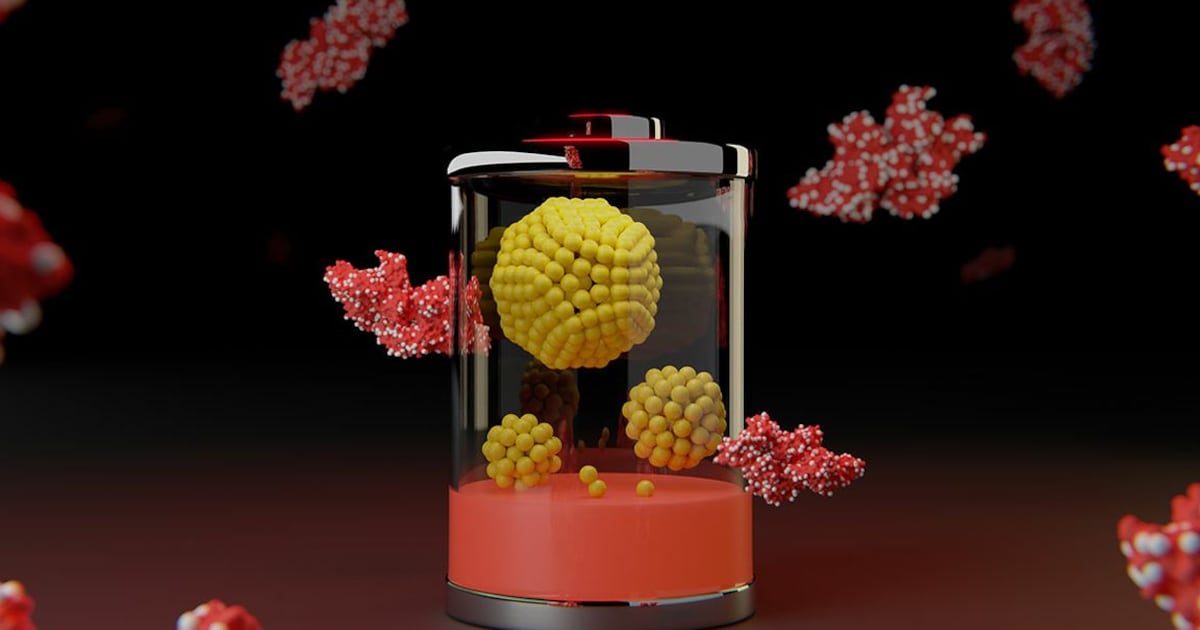
The researchers led by UCLA professor Ric Kaner were inspired by nature: They used the protein structure of bones as a model to construct a framework for the metal components of the battery. The nickel ions form the cathode and the iron ions form the anode. Graphene oxide serves as a connecting material. This creates particularly small clusters with a diameter of just five nanometers. For comparison: a human hair is 10 to 20,000 times as thick.
This increases the surface area within the anode and cathode and thus also the chemical reaction surface. The battery can charge or discharge significantly faster. Co-car Maher El-Kady says:
As we move from larger particles to these extremely tiny nanoclusters, the surface area increases dramatically. This is a huge advantage for batteries. When the particles are so tiny, almost every single atom can take part in the reaction. This means that charging and discharging are much faster, more charge can be stored and the entire battery simply works more efficiently.”
The proteins for the battery come from beef production. To produce it, the protein battery goes through a few more steps, such as being heated in water and then baked to create an airgel structure. In the end, around 99 percent of the material volume is air.

Bone battery achieves impressive test results
The prototype built by the researchers also showed impressive performance values in the laboratory. It could be fully loaded and unloaded in just a few seconds. It withstood 12,000 cycles, equivalent to 30 years of continuous operation, according to the scientists.
Another advantage is the absence of rare earths or other critical raw materials. El-Kady says: “We just mix common ingredients, use gentle heating steps and use raw materials that are available everywhere.” Dependencies on international supply chains or raw materials that come from problematic mining processes are eliminated.
Batteries will probably not be used in cars
The first nickel-iron batteries were developed 100 years ago because they wanted to use them to power electric cars. However, the technology will probably not be suitable for this today. Their gravimetric energy density of just 47 watt hours per kilogram is too low compared to conventional lithium-ion batteries. These are usually around three to five times higher.
However, the researchers see great potential as energy storage for solar parks or wind turbines. Thanks to their fast loading and unloading processes and their long service life, they are ideal for absorbing excess electricity from renewable energy production and releasing it again when required. It could also be used as an emergency power storage system.
In addition to the Americans, researchers from Iran, Egypt, Belgium and China were also involved in the project.
[ad_2]
About the Author