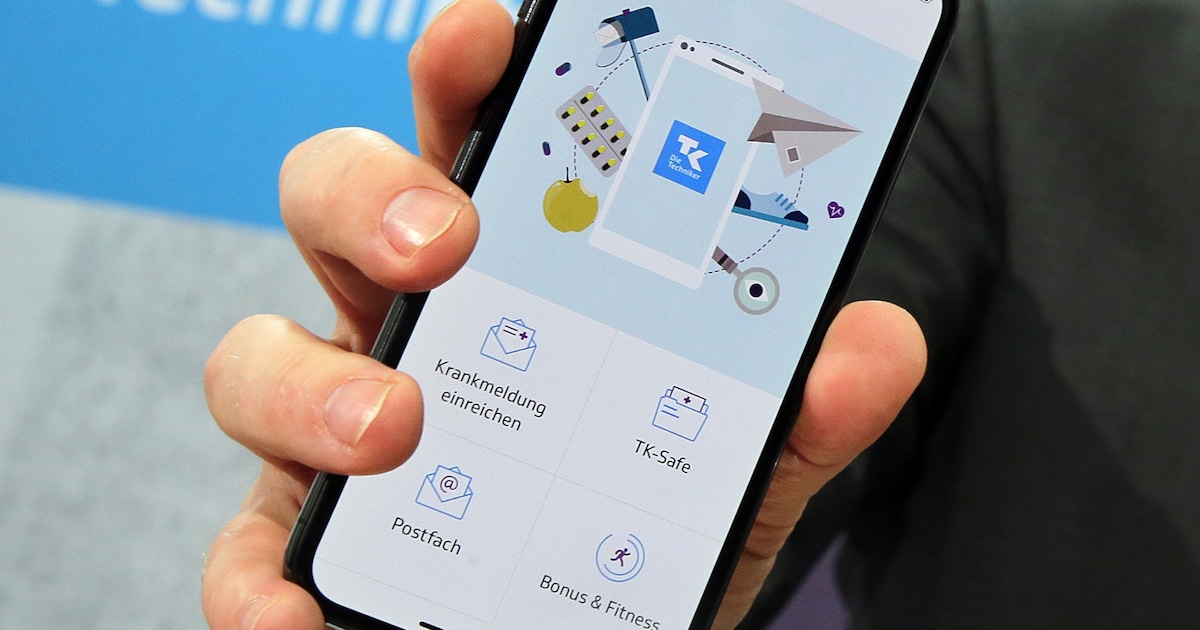
70 million people with statutory health insurance in Germany have an electronic patient file, but hardly anyone actually uses it. Now a new app function is intended to counteract this.
Since the beginning of 2025, those with statutory health insurance have automatically received one electronic patient record (ePA), unless they are actively contradict it. According to the federal government, the opt-out rate is only around 5 percent. However, another problem emerges:
- Around 70 million patient files have been created, but so far there are not even 4 million health IDs required to access the files.
This shows that although the ePA exists millions of times in the background, most insured people have never taken a look at it. The associated health insurance apps are largely ignored. In response to a small request, she… The federal government has now taken a position and answers, among other things, the question of how the EPA should become more user-friendly.
Why does hardly anyone uses the patient file?

There are many reasons why so few people even use their patient files. The main reason for this is that, firstly, the advantages are not clear to many users and, secondly, it is way too complicated to handle:
- complicated login procedures
- cumbersome identification
- different apps depending on the health insurance company
- overall not very intuitive operation
This list could be continued for a long time, and even those who already use the ePA might not be too impressed because many functions are simply still missing. But here we want to take countermeasures.
New push function aims to bring users back

Some new functions are intended to help, including push notifications. This is part of the upcoming ePA release 3.1 and is scheduled to start in summer 2026. Users should be informed automatically when:
- new doctor’s letters or findings are posted
- Laboratory results are available
- E-prescriptions are available
- Your own files are accessed
Reminders, for example from health insurance companies, are also planned. The aim is to get the ePA out of its previous passive role and to integrate it more closely into the everyday life of the insured. Other planned innovations:
- Full-text search within the ePA (from the end of 2026)
- Expansion of structured data such as laboratory values and doctors’ letters
- Better authentication procedures, for example via Video-Ident or, in the future, digital EU wallets
It is also said that the federal government is currently examining various options for further developing the telematics infrastructure, including electronic patient records.
Whether that will be enough to permanently activate millions of users remains to be seen in the next few years. It is clear that without easier operation, better user guidance, and real everyday integration, the ePA will continue to be an app that is ignored by many.
About the Author