Fast internet is not only available with fiber optics. You can also bring the cable access that often already exists into the network with gigabit. Background updates now bring more speed there.
Many households in Germany are still waiting for their fiber optic expansion. And the transition has been underway for a long time, not always smooth. You have to dig anyway, which is often associated with longer waiting times and contractual hassles.
What is often overlooked is that fiber optic technology is technically top-notch, but it is also not the only option for fast internet, and you should at least keep that in mind.
In many houses there is already an option for fast internet with TV cable connections, and GBit connections can usually also be booked. Vodafone claims to have already reached 30 million households in Germany. And the technology behind it doesn’t stand still either: this is what we report currently, Vodafone, that the existing infrastructure can be optimized by dividing network areas into smaller areas.
Segmentation in the background instead of construction work in the garden

According to Vodafone, 159 segmentation projects were implemented in over 100 cities and municipalities in December alone, including larger measures in Nuremberg, Wuppertal and Düsseldorf.
In the entire year 2025, Vodafone’s technology experts say they implemented 2,500 modernization measures for 620,000 households.
- Congested network areas are divided into smaller clusters.
- Existing amplifier points will be modernized and additional fiber optic nodes will be built.
- These new nodes are connected via fiber optics, so the proportion of fiber optics in the network increases with each segmentation
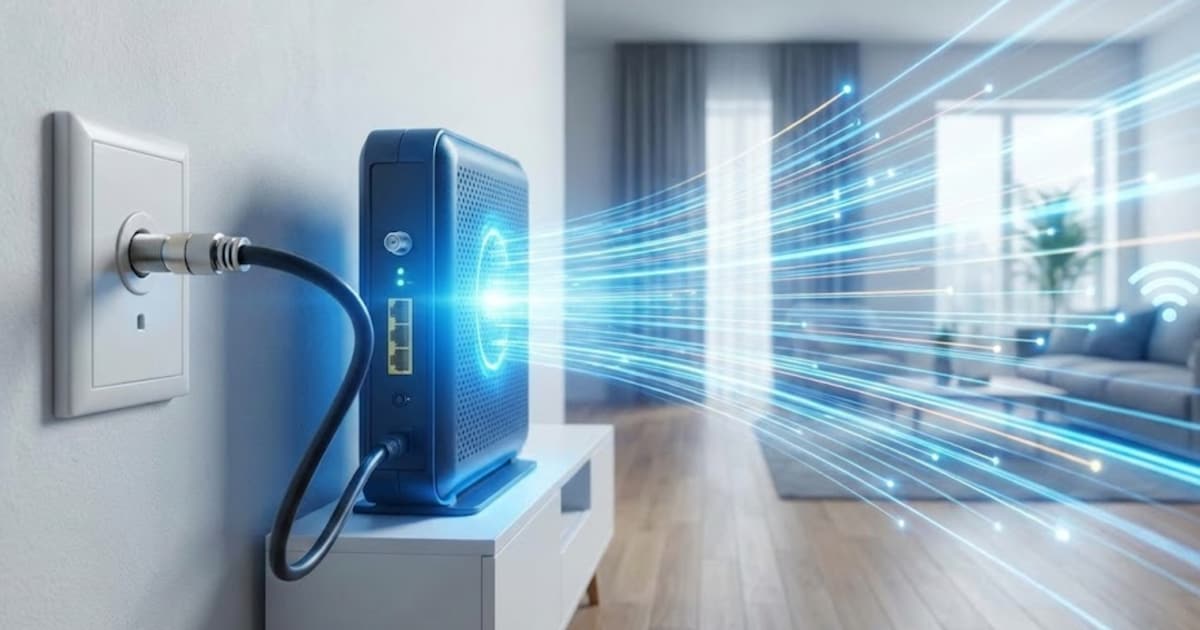
The fiber ends at the junction on the sidewalk. There the optical signal is converted into an electrical one and fed into the house via the existing coaxial cable using the DOCSIS 3.1 standard. Front gardens, cellars and house walls remain untouched, and construction work on the building is no longer necessary.
In technical jargon, the Vodafone network is also called an HFC network, Hybrid Fiber Coax, i.e. a mixed network with fiber optic and coax cables. Segmentation increases the proportion of fiber optics in the HFC network because additional nodes are connected via fiber optics.

But what is also true: The biggest shortcoming of classic cable connections remains the comparatively slow upload. In practice, only around 50 Mbit/s is standard here, even with high download speeds.
The tariff prices should not change due to the faster upload, but the upgrade is initially only available to new customers. The following standard switching scenarios apply to existing customers:
- You can switch to a more expensive new tariff at any time.
- Switching to a new tariff with the same monthly base price is possible after a contract term of 18 months.
- Switching to a new tariff with a cheaper monthly base price is only possible after the minimum contract term of 24 months has expired.
- In any case, a new minimum contract term of 24 months begins after the change.
About the Author