[ad_1]

When it comes to household cleaning, the Korean manufacturer Samsung, known for cell phones and televisions, also relies heavily on technology when it comes to vacuum cleaners: strong software combined with a lot of hardware. This has advantages but also disadvantages.
Note: Classification as a price tip or according to price limits is based on the cheapest shop offer in our price comparison; the price in the linked shop may differ.
Samsung has a deep love for “AI”. In this case, that not only stands for “Artificial Intelligence”, but presumably also for “All In” – because the manufacturer uses “AI” in almost every aspect of its AI-Jet cordless vacuum cleaner series. In particular, the adaptable AI Cleaning Mode gives it its name. How much “AI” is really in the devices according to the strict interpretation of the term and is not just a flashy brand term for sensor-controlled programs is ultimately debatable – but that doesn’t detract from the generally good to very good impressions.
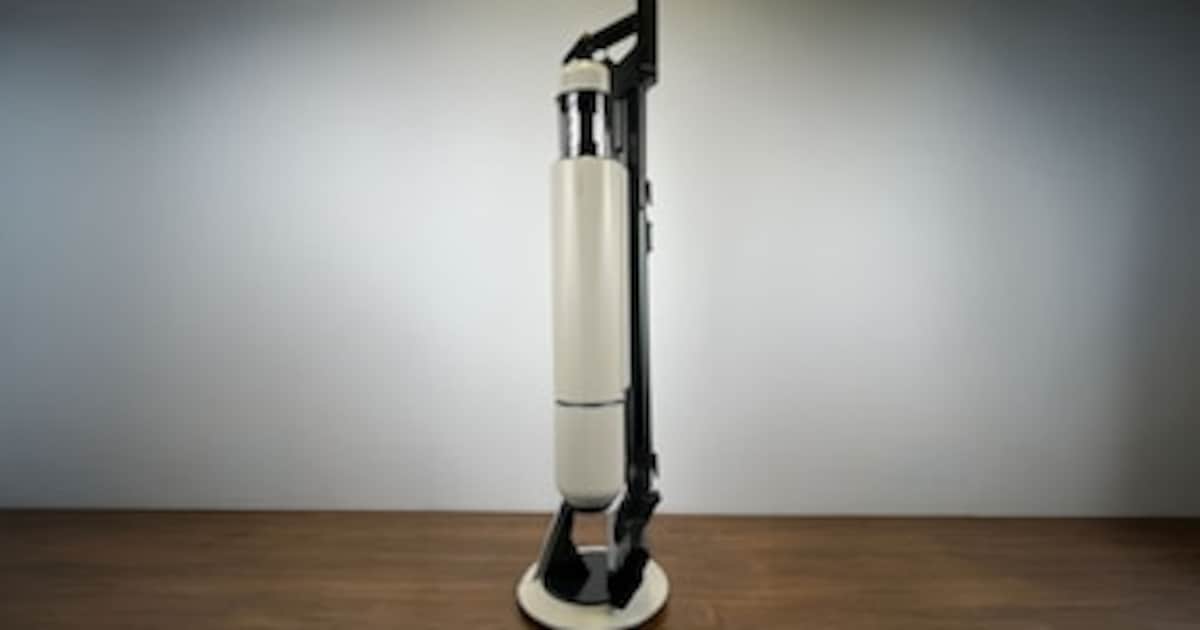
In addition to the programs and generally intuitive handling, Samsung is also one of the first manufacturers in Europe to make a suction station for cordless vacuum cleaners socially acceptable. Extraction stations have the great advantage that they reduce contact with dust and particles. Since many vacuum cleaners work without bags, regular emptying in the trash can always results in at least a small amount of dust clouds. In the suction station, the dust is compressed in a bag, which makes disposal much more hygienic. In addition, smarter stations can also blow out the filters in the vacuum cleaner – this increases their lifespan and at the same time that of the vacuum cleaner.
Samsung also offers models in the cheaper price segment, but the focus is clearly on devices above 500 euros.
Further articles on the subject of vacuuming, wiping and cleaning
[ad_2]
About the Author