[ad_1]
Camera expert Thomas Probst is impressed: With the premium smartphone Vivo
The Vivo X300 Pro (for testing) is currently considered the ultimate in smartphone photography and also impressively set the new record in the “camera” category in the CHIP test laboratory. In this practical test, we focus on the aspects that are crucial for photographers: the cameras, the image quality and what’s exciting for photo and video enthusiasts Vivo X300 Pro Best Experience Set.
Vivo X300 Pro: triple camera with high resolution
When it comes to the camera system, Vivo worked with the optics specialist Zeiss to the fullest: both the main camera of the The latter enables an optical zoom factor of around 3.7 and also covers a very large digital zoom range.
The main camera benefits from a large 1/1.28-inch sensor and a bright f/1.57 aperture and not only delivers sharp and low-noise results even in low light, but also very natural-looking background blur. The macro mode enables very professional-looking detailed shots, as the picture of the cactus shows. The videos in 4K with up to 120 frames per second or even in 8K/30p are also really impressive. A clear signal that Vivo is aiming the X300 Pro at demanding photographers and videographers.

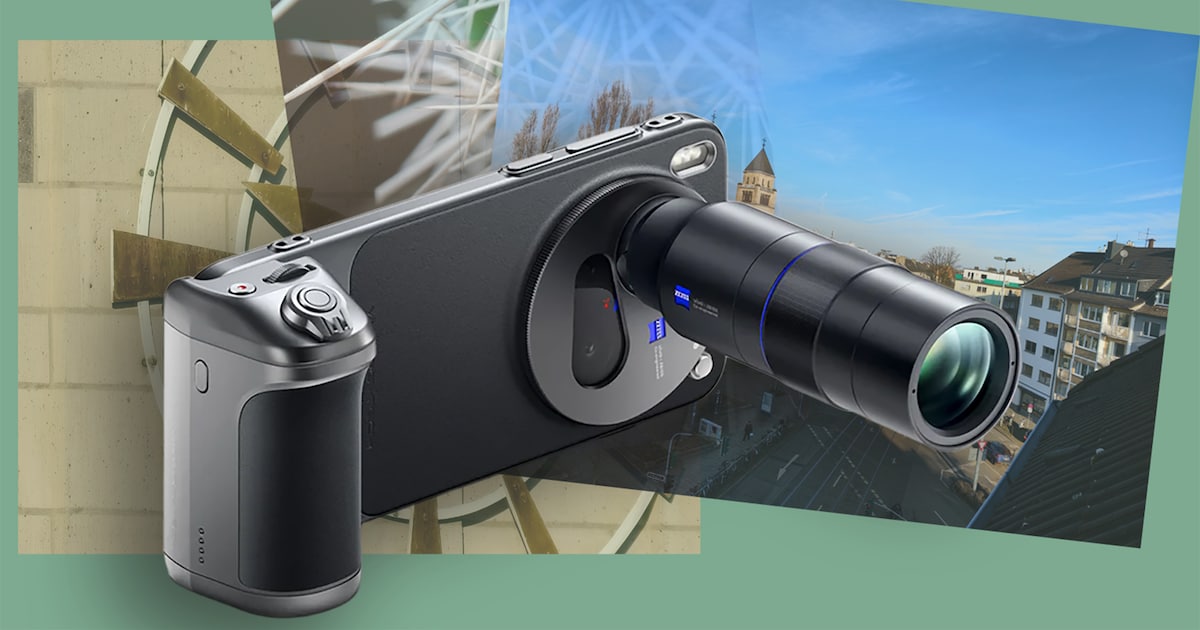
In addition, the smartphone is also available in an X300 Pro Best Experience Set, which is aimed specifically at professional users. In addition to the Vivo X300 Pro itself, the set includes a special protective case, a lens adapter, a 2.35x teleconverter from Zeiss and a separate camera handle for better handling. While the X300 Pro costs around 1,300 euros individually, the price for the complete photo/video kit is around 2,000 euros. We took a closer look at the extensive accessory package in the practical test.
Vivo X300 Pro Best Experience Set: Impressive telephoto shots
The X300 Pro Best Experience Set is not only fun, but also offers noticeable added value for anyone who wants to take more than just snapshots. Getting started is easy. First, the smartphone is inserted into the case provided. The camera handle can then be pushed sideways into the guide provided and at the same time connected to the smartphone via the USB-C port. The large handle ensures a secure hold and makes the smartphone look more like a camera.
The equipment includes a photo shutter button with an integrated zoom rocker, a video shutter button and an adjustment wheel that can be used to adjust the exposure compensation. This direct access to central recording parameters is particularly reminiscent of the operation of a classic camera. However, the handling is not entirely free from criticism: there is no thumb rest and when the camera app is activated, the thumb is exactly at the level of the touchscreen area for the “back” function. In practice, this occasionally led us to unintentionally close the camera app while taking photos.
To exploit the full potential of the set, the system can be supplemented with the included lens adapter and the Zeiss teleconverter with 2.35x magnification. Although it is a real chunk when mounted on the smartphone and weighs around 200 grams, it turns out to be a real highlight in practice.
The results speak for themselves: The top of the two practical photos of a church shown below were taken with the normal main camera at single magnification (equivalent to 24 millimeters in KB), the bottom image shows the church clock from exactly the same position with the Zeiss teleconverter attached at the equivalent of 1,600 millimeters (KB). The amount of detail that becomes visible from this distance is impressive. As it turned out in the practical test, you can only take photos with 12.5 megapixels with the attached teleconverter. With such a long telephoto range, it is not easy to aim at the desired image section. It is all the more pleasing that the image stabilization intervenes effectively and makes handheld photography noticeably easier.

[ad_2]
About the Author