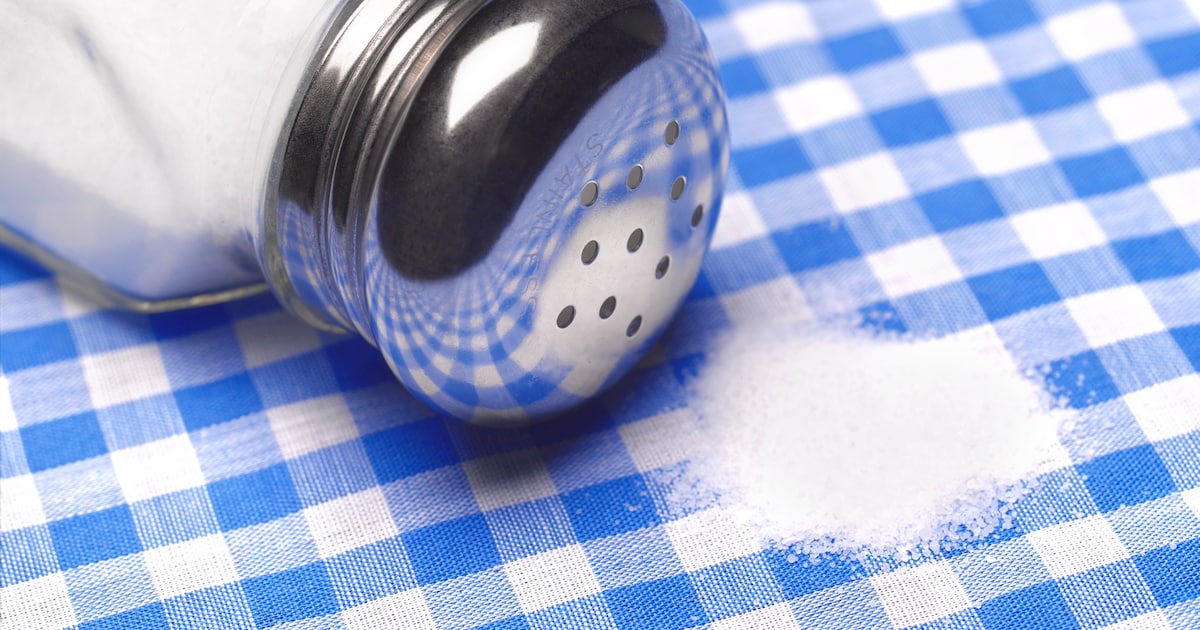
Table salt ends up on our plates every day. ÖKO-TEST tested the everyday product. The result: Only five salts are free of harmful substances. The positive side is that none of them performs worse than “satisfactory.”
Table salt is an everyday commodity and yet is rarely the focus of attention. More depends on the choice of salt than many people think: iodine supply, possible pollutants, and unnecessary additives. The experts at ÖKO-TEST have in issue 02/2026 Tested 20 iodized table salts from supermarkets, discounters, drugstores, and health food stores. In addition to iodine and fluoride content, problematic substances such as arsenic, lead, and PFAS, as well as added anti-caking agents, were tested in the laboratory.
Table salt at ÖKO-TEST: Five test winners, one contaminated with arsenic
A total of five products received the top rating of “very good.” The winners include:
- Alnatura fine-grained sea salt with iodine for 0.99 euros / per 500 g
- Sapphire sea salt iodized for 0.79 euros / per 500 g
The salts rated “very good” are predominantly fine-grained sea salts with added iodine, which do not require anti-caking aids and show neither increased heavy metal contents nor other abnormalities. It is also noticeable that some of these test winners come from the lower to medium price segment – so high-quality, well-composed table salt does not have to be exotic or expensive.
Elevated arsenic content: Iodized sea salt disappoints
One product was less convincing in the test. This is an iodized sea salt with added algae, which was only rated “satisfactory” due to its increased arsenic content: that Naturata Atlantic sea salt with iodine-containing algae. The arsenic value is more than half of the maximum permitted value for salt. It is assumed that the algae – which can naturally accumulate iodine, but also arsenic – are responsible for the increased value. This shows that it is also worth taking a critical look at organic and special salts if algae or other additives are involved.
Controversial trickle aid E 535 in 15 products: Why ÖKO-TEST devalues it
The biggest point of criticism in the test does not concern the salt itself, but rather the trickling aid Sodium ferrocyanide (E 535). This additive was contained in almost three quarters of the products examined. It prevents salt from clumping and makes sprinkling easier. E 535 is legally permitted in table salt. However, ÖKO-TEST refers to animal experiments in which high intake levels were used Kidney damage were observed and classifies the substance as controversial a.
- Salts with E 535 were generally used downgraded one grade.
- Products without a trickle aid were able to achieve the top rating more easily.
- In Organic salt E 535 is not permitted – and the products tested there show that table salt can flow well even without a trickle aid.
Tip: A simple household trick also makes the additive practically unnecessary: a few uncooked rice grains in the salt shaker bind moisture and significantly reduce the tendency to lump – without any additive and without affecting the taste or iodine content.
Sea salt, rock salt, iodized salt: What is really important to ÖKO-TEST
A variety of names can be found in stores: sea salt, rock salt, evaporated salt, alpine salt, “primeval sea” salt and more. When evaluating the products, the name is less important than the composition, according to the experts.
Sea salt is created by the evaporation of seawater, leaving the salt behind.
- evaporated salt comes from underground deposits; Salt is dissolved in water, the brine is cleaned and evaporated.
- Rock salt is mined and crushed in the mine.
- iodized salt is not a separate type of salt, but a salt in a fixed amount iodine was added to improve the iodine supply. Some products contain additional fluoride for caries prevention.
The evaluations by ÖKO-TEST show: Both sea salts and evaporated and rock salts can perform very well – the decisive factor is whether iodization is carried out and which additives are involved.
Iodized table salt is expressly recommended because many people in Germany do not consume enough iodine despite their overall high salt consumption. The German Nutrition Society gives a maximum of around 6 grams of salt per day for adults as a guideline; The WHO even puts it at 5 grams. When used in moderation, iodized table salt is therefore considered a useful addition to foods rich in iodine.
About the Author